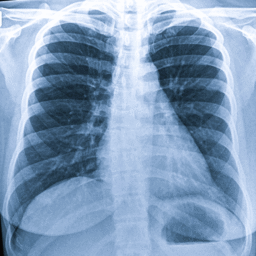

A gynecologist looking at a patient’s mammogram at the hospital
Over the next 12 months, tens of thousands of women across the U.S. will begin to have their short-term risk of breast cancer assessed in a new way. For the first time, they will receive risk scores revealing their likelihood of developing the disease in the next five years, not based on their genetics or family history, but through features on their mammogram, visible only to an AI tool called Clairity Breast.
This new tool was authorized by the Food and Drug Administration in May this year, a move that represented a seismic breakthrough for intelligent predictive algorithms. As noted by the Wall Street Journal, Clairity’s model, which has been trained on 400,000 routine mammograms, detects signs which are “so subtle and detailed that humans have yet to differentiate them on their own.”
The authorization comes on the back of studies which have shown that applying AI tools to mammograms often outperforms traditional ways of assessing a woman’s breast cancer risk. Clinicians have long recognized the need for alternatives, with Baṣak Dogan, a clinical professor at the University of Texas Southwestern Medical Center, saying in an interview that over 75% of the breast cancer patients she sees do not have any notable family history of the disease.
As a former radiologist myself, I was fascinated to hear about AI’s latest foray into the world of breast imaging, a field that has been moving at a rapid pace. In recent years, the FDA has also approved a series of AI-powered diagnostic tools designed to assist radiologists. “These models can serve as a second set of eyes,” says Manisha Bahl, an associate professor of radiology at Harvard Medical School and a radiologist at Mass General Brigham. “There’s potential to improve not only our accuracy, but also our efficiency.”
One of the main ideas, according to Bahl, is that this can help with the detection of so-called interval breast cancers, where women are told that their mammogram was normal, but are then diagnosed with cancer within 12 months. “There are a few reasons a woman could have an interval cancer,” she says. “One is that the radiologist missed it on the mammogram. It could also be a very fast-growing cancer, so it literally wasn’t present.”
MORE FOR YOU
Evidence is growing that AI could serve as a very useful double-check. Various studies have found that AI can detect 20-40% of interval cancers which were either missed by radiologists or not visible. When Bahl carried out a study earlier this year where she processed the initial mammograms for 224 interval cancers through an FDA-approved tool called INSIGHT DBT, she found that the algorithm was able to flag almost a third of them. “However, we still need to show that this [expected] reduction in interval cancer rate will actually play out in real world clinical practice,” she cautions.
Such answers are likely to be available before long. RadNet, which owns more than 400 U.S. radiology practices, is now deploying AI-powered breast screening solutions created by its subsidiary DeepHealth. In an interview with Kees Wesdorp, DeepHealth’s CEO, he told me that in one study of 570,000 patients, the tools had increased cancer detection rates by 21%.
But the reason these tools are being fast-tracked is not only about detecting more cancers. Radiology has long had a chronic workflow issue, with a growing backlog of mammograms and a shortage of trained breast radiologists to analyze them. In many European countries, for example, this is exacerbated by regulations that require scans to be interpreted by two independent radiologists followed by a consensus conference, and there are increasing suggestions that AI tools could pick up the slack by replacing the second radiologist. Various trials in Sweden and Germany over the last two years have indicated that AI could do so without compromising diagnostic accuracy.
In the U.S., breast cancer detection rates have improved over the last 14 years through the steady rollout of more advanced 3D mammography, otherwise known as digital breast tomosynthesis, with the one downside being that while accuracy has improved, it takes radiologists longer to read the scans. One of the hopes for AI is that it can ultimately speed up the analysis through flagging concerning sites on the scan. “The thought is that even though it’s not replacing us, it could make us more efficient,” says Bahl.
At the same time, for AI to really make a difference, radiologists have to fully trust it. There is still understandable skepticism among many specialists who recall the FDA’s approval of the first computer-assisted detection diagnosis tools in the late 1990s, a development that was widely heralded until it turned out that they made so many errors that the radiologists ended up simply ignoring them.
Bahl told me that while the latest AI tools represent a giant leap forward, they cannot be used blindly. “When a patient has [previously] undergone surgery, there’s a lot of distortion in the breast, and often the AI algorithms, in my experience, will give it a high-risk score because the distortion looks like breast cancer,” she says. “I think trust comes with use and experience.”
Given the rapid progress of AI, some have even begun to look ahead to a future world where algorithms are analyzing scans autonomously, questioning what that might mean for liability and whether patients would ever accept this. However, Bahl says she believes that due to the degree of intelligence and accuracy this would require, it’s still a long way off. “In the U.S., we’re like, ‘Oh, AI is going to replace radiologist jobs because it’ll just be interpreting mammograms without us,’ but I’m not concerned about that,” she says. “It’s possible, but I don’t think it’s in our near future.”
Such views are also echoed by the medical leaders pioneering AI’s future, including Connie Lehman, a professor of radiology at Harvard Medical School and founder of the company that has developed Clairity Breast.
“AI is not replacing radiologists,” she says. “Radiologists bring judgment, clinical context, and patient communication that no algorithm can replicate. CLAIRITY BREAST extends what we can learn from a single breast screening exam. Over time, this will support screening strategies that are more personalized, more equitable, and more effective at preventing advanced cancers, while radiologists focus on the human aspects of care.”
Thank you to David Cox for additional research and reporting on the article.
Editorial StandardsReprints & Permissions
Original source: US