Cases of spinal cord damage caused by nitrous oxide have risen sharply since the Covid-19 pandemic and while none were recorded at Beaumont Hospital between 2012 and 2020; fourteen were diagnosed between 2021 and the end of 2024 with the median age of patients being just 20 years old.
The findings come from a research team led by Prof Seamus Looby, Honorary Associate Professor at RCSI University of Medicine and Health Sciences and Consultant Neuroradiologist at Beaumont Hospital.
This clinical evidence supports warnings raised by youth workers and community organisations in recent years, said the study.
The findings, published in the American Journal of Neuroradiology highlight “the neurological risks posed by drug, often perceived by users as harmless.”
The study pointed out that nitrous oxide misuse has become increasingly common among children and young adults in recent years, driven in part by its low cost and easy availability online for legitimate medical and commercial purposes. But the drug can interfere with the body’s ability to process vitamin B12, leading to a condition called subacute combined degeneration (SACD) of the spinal cord. Symptoms include numbness in the hands or feet and difficulty with balance and coordination.
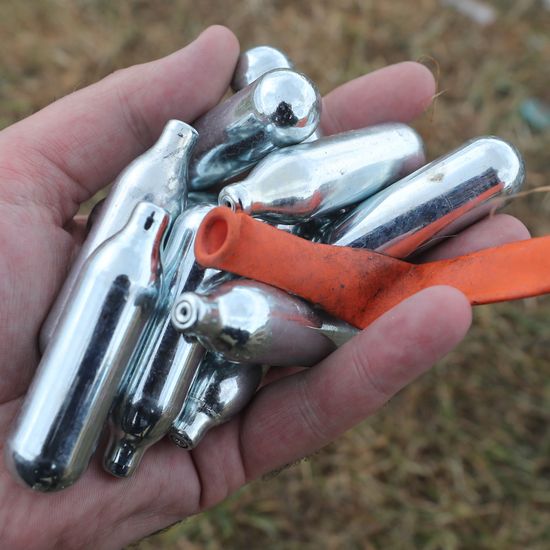
“Increasingly teenagers, many of whom may not use other substances, are inhaling laughing gas canisters as they consider it a bit of harmless fun,” said Prof Looby.
“But what we’re seeing tells a different story. The rise in cases of spinal cord damage since the pandemic is alarming and we hope it prompts greater awareness and education on nitrous oxide’s potential for permanent, damaging effects.”
He added: “We want to encourage anyone experiencing early symptoms to seek medical help early and be open about any nitrous oxide use, to facilitate timely diagnosis and enable treatment to limiting long-term neurological damage.”
Although most patients in the study improved after treatment, none made a full recovery, with all experiencing some degree of lasting neurological damage.
The research which is the second-largest European case study of nitrous oxide-induced SACD was carried out in Beaumont Hospital by a dedicated team of Dr Richard Bruen, Radiology Registrar and Dr Sophie Sabherwal, Neurology Registrar, with input from Dr Lisa Costelloe, Consultant Neurologist.
Original source: ie