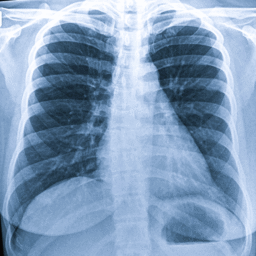

Capital expenditure for Nigeria’s health sector plunged by nearly 100 percent in 2025, a collapse that is crippling critical infrastructure, stalling planned projects, and raising serious concerns about the sustainability of healthcare delivery across the country.
While total health sector budget allocations have increased from N547 bililion in 2021 to N2.48 trillion in 2026, actual disbursements for capital projects have failed to keep pace. According to data from the Budget Office of the Federation, only N36 million was released in 2025 out of N218 billion appropriated, a 99.94 percent drop from the N65.4 billion released in 2024.
Muhammad Pate, minister of health and social welfare, told lawmakers recently that this funding shortfall has effectively stalled the ministry’s planned infrastructure rollout. Delays in counterpart funding have also prevented access to certain donor-supported projects, compounding the crisis.
Read also: Over N98bn injected into Nigeria’s primary health sector – Tinubu
Health experts warn that near-zero capital releases are affecting everything from hospital upgrades and procurement of medical equipment to vaccines and essential medicines, threatening both critical care delivery and broader health outcomes.
“Poor health sector capital releases are very concerning,” Adaobi Onyechi, a public health expert stated.
Although total sector budget allocations rose to N2.48 trillion in 2026, the increase has not translated into meaningful disbursements for capital projects. Capital releases have steadily declined over the past five years, leaving the sector underfunded even before the near-total collapse in 2025, when only N36 million was released out of N218billion appropriated.
In 2021, the ministry of health received N93.8bn out of a N194bn capital allocation representing to 48.4 percent of the approved budget. In 2022, capital releases fell slightly to N87.3bn, representing 64.8 percent of the N134.7bn allocation.
The decline continued in 2023, when N40.4 billion or 30.1 percent of the N134 billion allocation was released marking a 53.7 percent drop compared with 2022.
In 2024, N65.4 billion was disbursed, amounting to just 15.06 percent of the N434.8 billion allocation. Although this represented by a 61.9 percent increase in nominal terms compared with 2023, the funding remained significantly lower.
The decline was significant in 2025, when out of the N218 billion appropriated for capital projects, only N36m was released, just 0.02 percent of the allocation. This represented a 99.94 percent decline from the N65.4billiom released in 2024 and amounted to only 0.04 percent of the 2021 disbursement.
Over the five-year period, the compound annual rate of decline in capital releases stood at approximately 86 percent, underlining the systemic nature of poor funding.
Health experts have raised concerns about the implications of this trend, noting that capital budgets underpin investment in infrastructure, procurement of medical equipment and expansion of service delivery points.
Onyechi said Nigeria’s weak health indicators and high disease burden made it imperative for the sector to be prioritised not only in budgetary allocations but in actual funding.
“Nigeria has one of the highest maternal mortality rates. Millions of children go without immunisation, malaria remains a major burden, and the list goes on,” she said.
According to her, near-zero capital releases mean infrastructure upgrades, procurement of equipment, medicines and vaccines are either postponed or cancelled altogether.
A review of the 2025 budget shows several projects affected by the poor releases. These included procurement of 10,000 vials of anti-snake venom and related consumables; procurement and distribution of one billion units of point-of-care sickle cell scanners for childhood screening valued at N630.7 million; upgrading and equipping Federal Teaching Hospital, Azare, and Federal Medical Centre, Misau, at N1.1 billion; procurement of cancer equipment infrastructure in six teaching hospitals valued at N63.6 billion; intervention works at the University of Maiduguri Teaching Hospital, including the cancer centre, radiology department and oxygen plant, at N3.3billion.
It also included procurement of rapid malaria test kits at N331.9 million ; infrastructure projects valued at N13.2 billion; and procurement of drugs, consumables, equipment, laboratory reagents and test kits targeting 10 million vulnerable Nigerians at N60.2 billion.
The funding shortfall is also affecting disease control and emergency response. Data from GovSpend and the Budget Office show that in 2024, N4.4 billion was appropriated to the Nigeria Centre for Disease Control, but only N1.1billion was released. In 2025, the allocation increased to N7.4 billion, yet just N1.3 billion was disbursed.
The capex shortfall is already evident in vaccine stockouts and interruptions to immunisation schedules, a situation exacerbated by declining donor support.
Chika Offor, executive director of the Vaccine Network for Disease Control, said funding gaps caused by non-release of budgeted funds impacts vaccine availability.
By November 2024, Nigeria was already experiencing stockouts of critical vaccines such as rotavirus. In the 2024 fiscal year, the government released N29 billion out of more than N100 billion appropriated for vaccines. In 2025, none of the N231 billion budgeted for vaccines was released until November, when N68 billion was eventually disbursed as counterpart funding under Nigeria’s partnership with Gavi, the Vaccine Alliance.
Offor warned that Nigeria was already grappling with low vaccination coverage, contributing to preventable child deaths.
Read also: Nigeria’s health sector needs systemic reform, not fragmented fixes – Dayo Adu
“The government needs to fund our vaccines. We continue to experience stockouts, and primary healthcare facilities do not have the resources they need,” she said, calling for sustained investment in primary healthcare, improved welfare for health workers and consistent funding for facilities.
The crisis is further compounded by the continued decline in donor support for health programmes. This has left the government increasingly reliant on domestic allocations that are not being released.
The twin pressures of weak domestic capital releases and dwindling donor support threaten to reverse years of gains, further straining infrastructure and service delivery unless funding improves significantly, experts warn.
Original source: ng