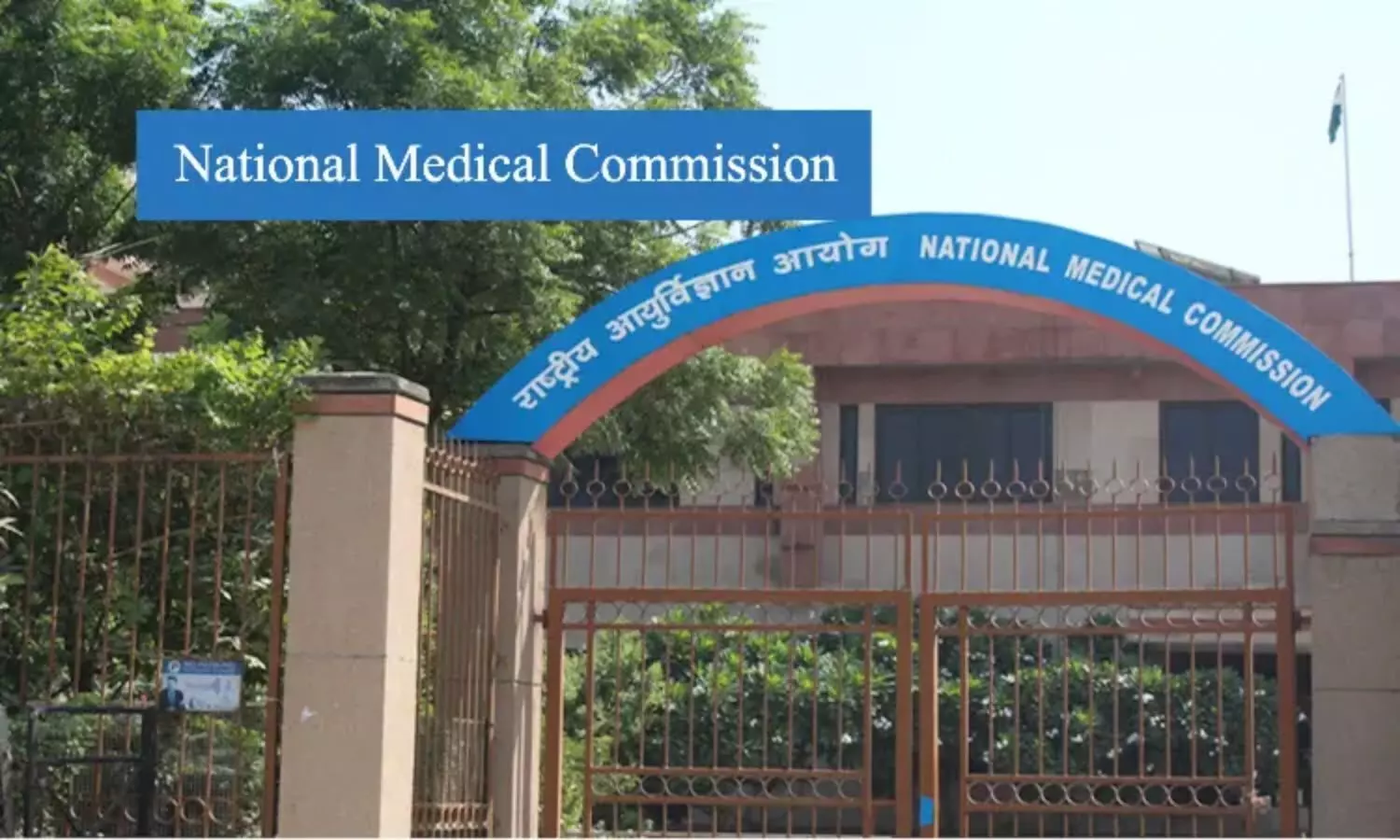
New Delhi: The Postgraduate Medical Education Board (PGMEB) of the National Medical Commission (NMC) issued amendment to the Minimum Standards of Requirements for Post-Graduate Courses 2023 (PG MSR 2023) and asked all medical colleges and institutions across the country to comply with the updated rules with immediate effect.Issuing a public notice on 11.03.2026, the PGMEB informed that the standards for running postgraduate medical courses have now been amended as of February 20, 2026. These norms define the minimum requirements that institutions must meet to start and run PG medical programmes in the country. The notice mentioned, “The Post-Graduate Medical Education Board (PGMEB) of the National Medical Commission (NMC), deriving its authority from Section 25(1)(a), (c), (d), and (e) of the National Medical Commission Act, 2019; Regulation 10 of the “Establishment of New Medical Institutions, Starting of New Medical Courses, Increase of Seats for Existing Courses and Assessment and Rating Regulations, 2023” and Regulation 3.4 of the Post-Graduate Medical Education Regulations, 2023, is responsible for setting the Minimum Standards of Requirements (MSR) for starting and running Post-Graduate (PG) medical courses in India. These standards specify the basic requirements that medical colleges must meet, such as infrastructure, faculty, equipment, and clinical facilities.”As per Regulation 3.4 of the Post-Graduate Medical Education Regulations, 2023, the criteria for running Post-Graduate courses are called Post-Graduate Minimum Standards of Requirements, 2023 (PGMSR-2023).The first version of PGMSR-2023 was issued by the National Medical Commission on 16 January, 2024 through a Public Notice. Subsequently, the standards were revised and updated through amendments issued on 23 August, 2024 and 14 January, 2025. These amendments were carried out to update or clarify certain requirements related to postgraduate medical education.Now, based on the need for further updates, the PGMEB has issued another amendment to PGMSR-2023. “These latest amendments will come into force immediately, and all concerned institutions are required to follow the updated requirements from that date onwards,” mentioned the notice. Referring to this notice, the National Medical Commission addressing the Director/Principal/Dean of all the Medical Colleges/Medical Institutions of India stated, “Reference is invited to Public Notice No.N-P016(11)/1/2023-PGMEB-NMC (e8383995) dated 11-03-2026 issued by the Post-Graduate Medical Education Board (PGMEB) on the above subject matter being self explanatory interalia issuing another amendment to the Post-Graduate Minimum Standards of Requirements, 2023 (PGMSR-2023) which shall come into force immediately, and all concerned institutions are required to follow the updated requirements from that date onwards. All institutions/stake holders are requested to take note of these amendments for compliance.”The key takeaways from the recently amended PGMSR 2023 are as follows: The document mentioned that an institution conducting both undergraduate and post-graduate teaching shall satisfy the minimum requirement for undergraduate training as prescribed by UGMEB in the UG-MSR document and shall also fulfil additional requirements for post-graduate training. It mentioned that the following requirements will be fulfilled by all post- graduate medical institutes, including standalone institutes:(i) The hospital building shall conform to the existing national building norms and various local statutory regulations for hospitals taking into consideration the requirements of the hospital as a service provider including administration, registration, records storage, out-patient and inpatient areas, operating theaters, Central Sterile Services Department (CSSD), Intensive Care Unit (ICU), Radiology and laboratory services, emergency areas, etc. Mandatory regulatory/licensing approvals and all statutory requirement/clearances should have been obtained from the appropriate administrative authorities/State Government/Central Government/Pollution Control Board/Municipal Corporations/Councils etc.(i) All the departments shall have an adequate number of the latest in-house equipment and training facilities. The departments shall have digital library and a seminar hall with high-speed internet/Wi-Fi connection to have direct relay from the operation theatre and also to conduct/relay global scientific live programs. In department of Radio-diagnosis, Anaesthesiology, Pathology, Microbiology, and Biochemistry, there shall be increase in the faculty, infrastructure, and other staff with the increase in the number of beds/ workloads in the hospital. (iii) At least 80 per cent of the hospital beds should be occupied throughout the year by patients requiring inpatient care. (iv) Minimum 15 per cent of the total beds in the Department imparting postgraduate training should be Intensive Care Unit (ICU) beds / High Dependency Unit…
Original source: in