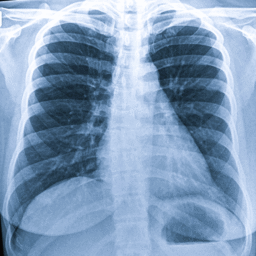

Biological males who identify as women can access BreastCheck after taking feminising hormones for more than five years, a response to a parliamentary question has revealed.
In response to a question from Independent TD Carol Nolan, the head of the breast cancer screening service said that ‘people who are transgender, non-binary or intersex can take part in screening if they were registered male at birth and have been taking feminising hormones for more than five years and have breasts or female breast tissue’.
Fiona Murphy, chief of the National Screening Service, said it was committed to ‘ensuring that BreastCheck is accessible to everyone who needs it’.
She said the service had carried out a comprehensive review of breast cancer risk and screening recommendations for transgender, non-binary and intersex people, including a review of clinical evidence and international guidelines.
Ms Murphy said BreastCheck teams had received transgender, non-binary and intersex awareness training and the service had consulted LGBTQI+ organisations and community members.
On gender recognition certificates, she said the register was compiled using information supplied periodically by the Department of Social Protection.
Ms Murphy said: ‘If someone has a gender recognition certificate and we have not received their details from the Department of Social Protection yet, they will not automatically be invited for screening.
‘In this case they can contact us, and we can add them to the register or update their details.’
The HSE’s stance is in line with policy in some other countries.
In the NHS in Britain, transgender women and non-binary people assigned male at birth are invited for breast screening every three years from the age of 50.
The American College of Radiology noted last year that while transgender women have a smaller chance of getting breast cancer than biological females, their risk is higher than men.
They recommended that trans women who have been using feminising hormones for at least five years and are over 40 may benefit from an annual mammogram.
However, Ms Nolan said the HSE’s policy represents a ‘pattern of systemic erasure of biological reality within women’s health services’.
She said: ‘BreastCheck has confirmed to me that it does not differentiate participants on the basis of gender identity and that its register does not identify whether someone has obtained a gender recognition certificate.
‘In other words, the programme has been redesigned to treat biological sex as irrelevant even though breast cancer risk is overwhelmingly sex-based.’
Ms Nolan said the latest information showed BreastCheck was operating under guidance that ‘blurs biological categories’ and allows biological males into a screening programme designed for women aged 50 to 69.
She said: ‘This is institutional capture. Women’s healthcare is being reshaped around gender ideology rather than biological fact and the consequences are becoming impossible to ignore.’
BreastCheck is the national screening programme and screens women aged 50 to 69 who have no symptoms of breast cancer with the aim of detecting and treating the disease at the earliest possible stage.
The service covers 54 local areas using 24 mobile screening units and four permanent clinics.
However, concerns have grown over BreastCheck’s ability to meet its screening targets.
A parliamentary question from Peadar Tóibín indicated that in 2024 the service fell significantly short of its target of 195,000 people screened, carrying out 137,134 checks.
In 2023, the target was 185,000 – 166,532 checks were carried out.
Ms Murphy previously told RTÉ Radio One’s Today show that a global shortage of radiographers and radiologists was one factor behind the shortfall, with recruitment ‘particularly difficult’ in Europe.
Acknowledging the pressures facing the service, Ms Nolan said this made it all the more important that BreastCheck remained focused on its core purpose.
She said: ‘Yes, workforce shortages are a global issue and I accept what BreastCheck’s own CEO has acknowledged regarding the difficulty in recruiting radiographers and radiologists.
‘But to my mind that makes it even more important that the programme stays tightly focused.
‘BreastCheck was created with a clear mission to deliver timely, high-quality screening for biological women.
‘So, when a service is struggling to meet its core targets, the last thing it needs is policy drift or ideological expansion that distracts from that original purpose.
‘If BreastCheck cannot meet its basic screening commitments, then every decision that complicates or broadens eligibility has to be questioned.
‘The priority must be restoring capacity, not reshaping the programme around contested ideological frameworks.’
Ms Nolan said the policy was all the more alarming given recent reporting about males being aided to lactate.
She said: ‘This policy cannot be divorced from the wider controversy surrounding so‑called “male lactation” and the recent Association of Lactation Consultants in Ireland (ALCI) issue.’
Ms Nolan was referring to the revelation that figures within the ALCI, an organisation with links to the HSE, had platformed a speaker promoting male lactation.
She said: ‘This has provoked widespread public outrage and serious safeguarding concerns.’
Responding to a request for comment the HSE denied there were any waiting lists for BreastCheck.
A spokesman said: ‘Women are not on a waiting list. The timing of this appointment relates to when the mobile unit is next due in the area. Most women (seven in ten) are screened within the target time of two years of their last appointment, or from when they become eligible.
‘BreastCheck is accessible to everyone who needs it. We record the number of eligible people and the number we screen. This includes women, transgender, non-binary and intersex people.
‘The risk of breast cancer for transgender, non-binary and intersex people depends on age, whether the person has breast tissue and exposure to hormones such as oestrogen and progesterone.’
Original source: gb