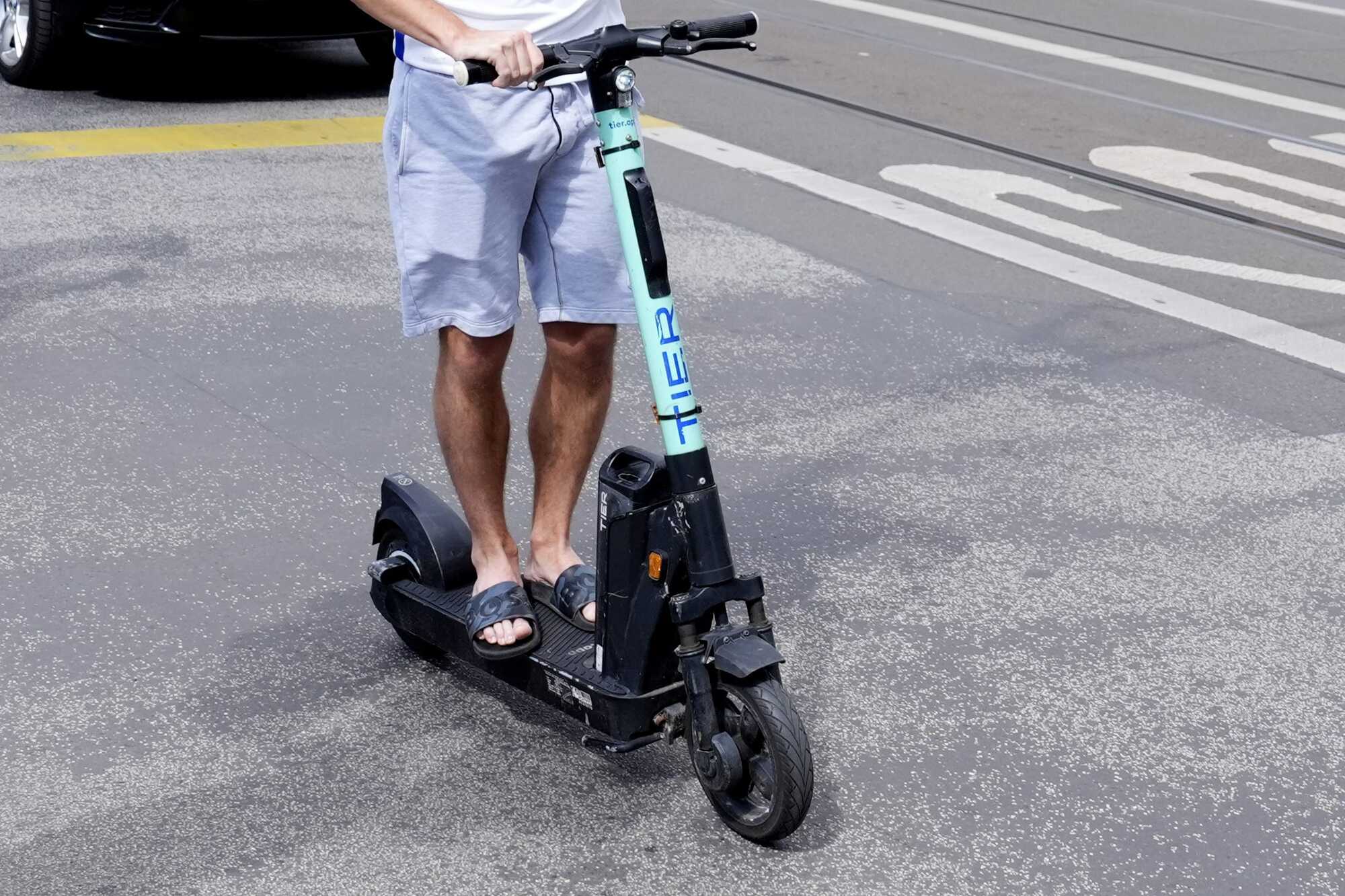
Scrambler and e-scooter-related injuries are rising at an “exponential rate” and “stretching” an already overstretched system, emergency doctors have said.
Two consultants in emergency medicine and trauma at the Mater hospital in Dublin told the Oireachtas justice committee that presentations there for e-scooter-related injuries have been steadily rising over the last two years.
Dr Shane Broderick, a consultant in emergency medicine and trauma at the Mater, Ireland’s designated national major trauma centre, said presentations of e-bike related injuries have doubled in the last year, and other hospitals have seen numbers quadruple.
The medics welcomed the change in laws around e-scooters, but said that an outright ban on scramblers should be on the table.
In its presentation to the committee on the use of scrambler bikes and e-scooters, TDs and Senators were also told that there should be consequences for parents who buy an e-scooter for their child.
Dr Luke Phillips, a consultant in emergency medicine and trauma, said: “Significant limb injuries were the most common seen, with many requiring trips to theatre and placing an ever-increasing burden on our ED and inpatient units.
“Worryingly, 8% of our patients were pedestrians struck by someone else’s scooter.
“The burden on the paediatric population has also been well documented recently, with over a third of traumatic brain injury admissions in children being e-scooter-related and this is a pattern we are also seeing in the adult population.”
Sinn Féin TD Mark Ward said e-scooters and scramblers have been terrorising and intimidating communities for about 10 years.
He said e-scooters and scramblers were being used to intimidate and transport drugs and to frighten people.
Dr Broderick said that as it was illegal for under-16s to use an e-scooter, parents should not be buying one. The age limit will rise to under-18s later in the month.
He said: “You absolutely shouldn’t be buying it.
“It’s simple as that. If a parent is buying an e-scooter for a child, it’s illegal. You shouldn’t be doing it, and there should be consequences potentially, should they purchase an e-scooter for children that are underage.”
Dr Broderick added: “Our presentations have gone up across all these three demographics. So from a scrambler point of view, our numbers are higher this year than last year.
“From an e-bike perspective, our presentations have doubled. If you look at the study in Drogheda, they have pooled data between e-scooters and e-bikes, but their data shows that their presentations have quadrupled.
“In CHI (Children’s Health Ireland), their numbers have doubled. So, we’re already stretched. We’re already busy. We’re already busy from a trauma point of view, and there’s no doubt that these numbers are rising at an exponential rate for us, and it’s stretching an already-overstretched system.”
Dr Phillips said: “A major trauma coming into our department will take up a lot of resources, so that’s an hour or two of a big team’s work that aren’t seeing patients waiting to be seen.
“If, say, a person came off their bike with major injuries, that’s a team of about three or four doctors, and at night time, that’s our whole emergency department, and then it takes about three or four nurses plus radiology, the inpatient teams, and some of them need to go into emergency theatre.
“Then that probably cancels out like theatre for the next day sometimes. There’s a lot of downstream effects that happen in the hospital with these patients coming if they’re sick.”
Dr Phillips said that changes to the laws regulating e-scooters and scramblers in recent months have been “extraordinary”.
“Now we just need to see that being enforced, and we need to see what happens in the next six or 12 months with the data now that those regulations have come in,” he said.
Dr Broderick said: “A law is only as good as well as it is enforced. Otherwise, it’s lip service. So if it’s not enforced, if people don’t know that if I flout the law, that I might be caught, I might be prosecuted for it, then people will carry on regardless.”
Dr Broderick said that the 380 trauma patients they saw in two years, spent 3,000 hours in their department.
“They spent 300 days as admitted inpatients,” he added.
“So 14% of them required admission, and 11% needed an operation. So that’s a huge burden, a huge part of our workload.
“Ultimately e-scooters are only one part of that. Scrambler victims tend to be more severely injured because they’re travelling at higher velocity, they tend to spend longer in hospital.
“The study from CHI shows that those kids have spent on average 18 days in hospital, which is multiples of what a child with a non-traumatic injury or non-trauma associated presentation would spend in hospital.
“That 18 days, if you just even look at that and extrapolate back to our own trauma data, on average, main trauma patients spend five to seven days admitted, and that’s the whole breadth of trauma.”
Original source: gb