Fact checked by Nick Blackmer
Why this matters: Some common household products can expose you to chemicals linked to cancer, though the risk varies.What you can do: Reduce exposure with tips like avoiding harsh disinfectants and using glass food containers.The payoff: Limiting repeated exposure to potentially harmful chemicals may help reduce your long-term cancer risk.
Every day, you’re likely exposed to countless chemicals—some of which may pose real health hazards, while concerns about others may be overstated. To cut through the noise, doctors shared the household items they personally avoid because of a potential cancer risk.
1. Harsh Disinfectants and Fragranced Cleaners
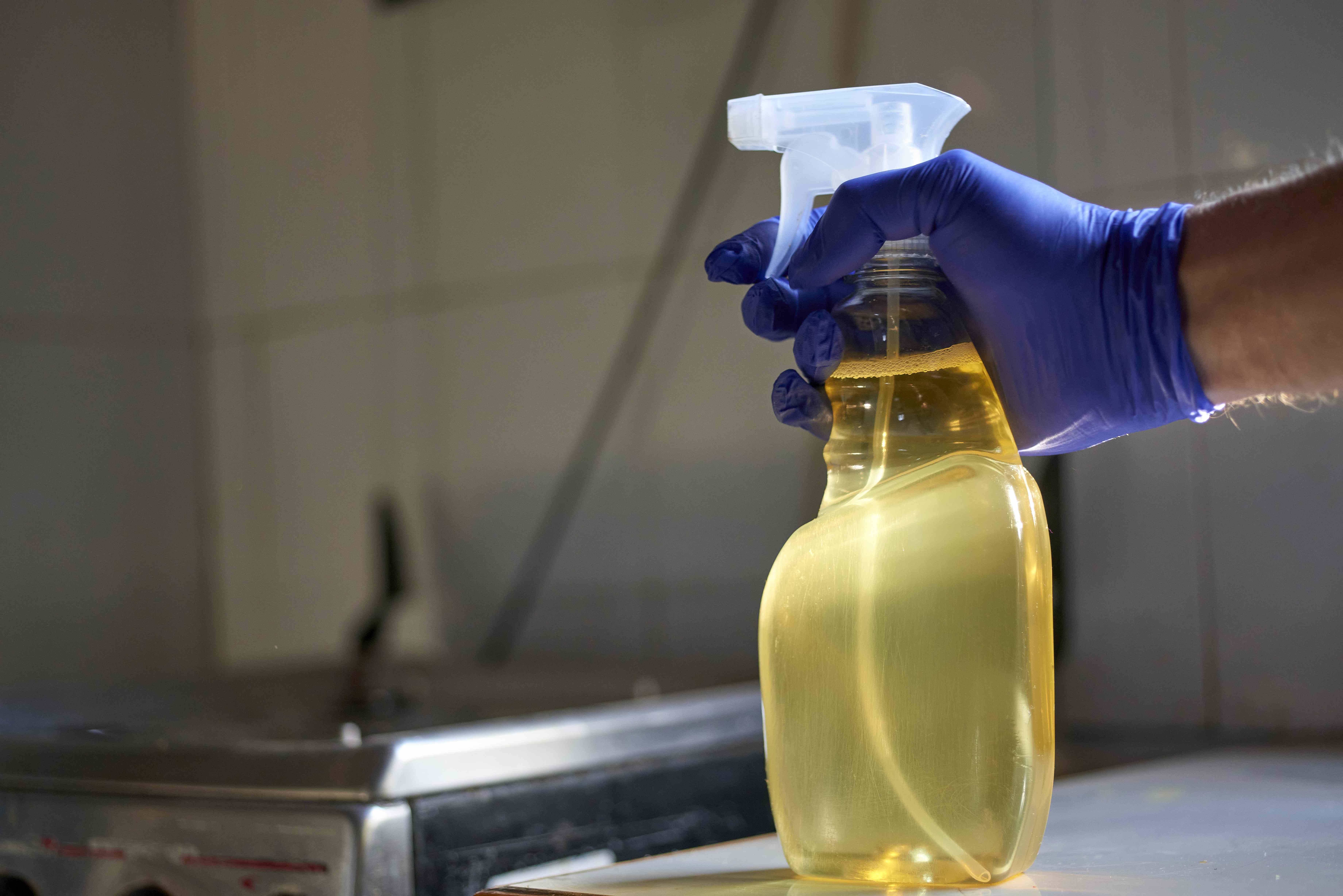
Harsh, fragrant cleansers may be effective, but some of their chemicals may be harmful, said Jay Luthar, MD, founder and medical director at Lutanen Health and an instructor at Harvard Medical School.
While these items vary widely by brand, a 2024 review found that cleaning and disinfecting products can increase exposure to a range of indoor pollutants, including compounds like chloroform, a known carcinogen.
Luthar said he tries to limit “disinfectant sprays, heavily fragranced cleaners, and products like plug-in air fresheners that continuously release chemicals into indoor air.”
Instead, he uses simple, fragrance-free products for everyday cleaning—such as vinegar, baking soda, and soap—and reserves disinfectants for situations where they’re needed. “For odors, I prefer addressing the source, improving ventilation, or using appropriate filtration rather than masking the odor with fragrance,” he added.
2. Plastic Food Containers
For food storage, Luthar avoids plastic containers, especially if he plans to reheat them. Research has found that certain chemicals used in plastics and food packaging, including phthalates and bisphenols, can leach into food, and higher temperatures can increase the exposure.
Phthalates and bisphenols are classified as endocrine disruptors, meaning they may interfere with the body’s hormone system, raising concerns about their potential cancer risk.
“In 2026, the International Agency for Research on Cancer (IARC) classified three phthalates as possibly carcinogenic to humans, based largely on animal and mechanistic evidence,” Luthar said, though more human research is needed to determine the extent of the cancer risk.
“For me, this is a precautionary choice because food storage and reheating are repeated exposures, and there is an easy alternative,” Luthar told HEALTH. “I prefer glass containers for storing and reheating food and stainless steel for storage when reheating isn’t necessary.”
3. Gas Stoves (Without Proper Ventilation)
Many Americans have a gas stove in their kitchen, but Daryl Eber, MD, co-founder, medical director, and lead radiologist at 3T Radiology & Research, would never use it without proper ventilation.
“Gas-burning stoves on high or ovens at just 350 degrees Fahrenheit raise benzene levels indoors, a carcinogen linked to leukemia, and those levels go beyond what’s found in secondhand smoke,” he told HEALTH. “It can drift into other rooms and hang there for hours.”
To improve ventilation, keep the exhaust hood on and open a few windows when you use a gas stove or oven. If you’re in the market for a new stove, Eber recommended an induction cooktop, which uses an electromagnetic field to heat pans directly, without the air pollution produced by burning gas.
4. Composite Wood Furniture
Eber also avoids furniture and cabinetry made from composite wood, including particleboard, plywood, and medium-density fiberboard.
These products contain adhesives that can emit formaldehyde, a chemical gas linked to several types of cancer, including nasopharyngeal cancer and leukemia. Exposure may be even higher in warm, humid climates, and when products are newly purchased, Eber noted.
“Choose solid wood whenever possible, or look for products that specify that there’s no added formaldehyde,” he advised.
5. Stain- and Water-Resistant Products
Luthar also steers clear of any stain- or water-resistant items, such as furniture and rugs. These products may contain per- and polyfluoroalkyl substances (PFAS), long-lasting chemicals used to repel water, oil, and stains, often called “forever chemicals.”
Certain chemicals in the PFAS family have been linked to cancer. The IARC has classified perfluorooctanoic acid (PFOA) as carcinogenic to humans and perfluorooctanesulfonic acid (PFOS) as possibly carcinogenic to humans.
“This classification identifies a cancer hazard, but it does not tell us the cancer risk associated with owning a particular treated couch or rug,” Luthar clarified.
Still, he opts for products without stain- or water-resistant treatments, often buying items made from natural fabrics such as cotton, wool, linen, or silk.
Read the original article on Health
Original source: us