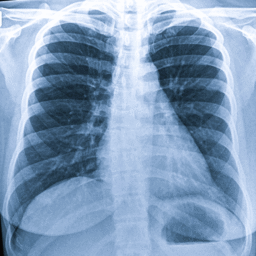
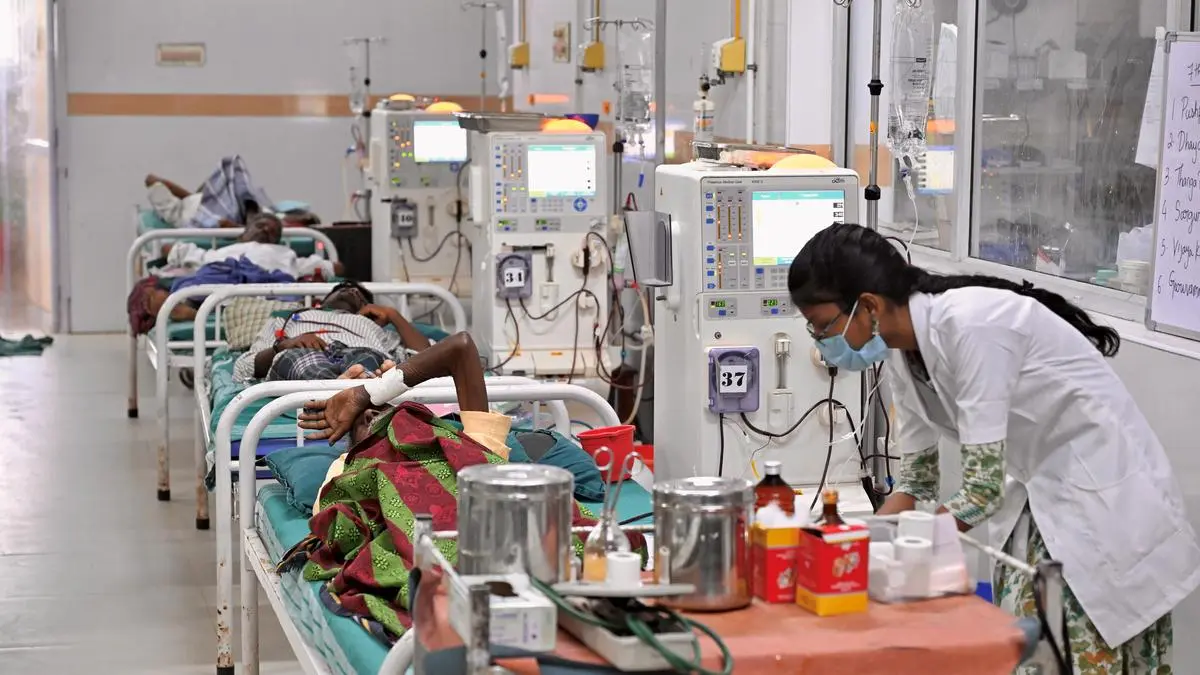
When people think about healthcare, they usually think about doctors, hospitals and medicines. Yet the reality of modern healthcare is very different. Every diagnosis, surgery, dialysis session, laboratory test or rehabilitation programme depends on a vast ecosystem of professionals who work behind the scenes. Laboratory technologists, imaging specialists, dialysis technicians, physiotherapists, operation theatre staff and many others translate medical decisions into actual patient care.
These professionals collectively known as Allied and Healthcare Professionals (AHPs) form the operational backbone of the health system. They constitute nearly 60 per cent of the healthcare workforce and are essential to the efficiency, safety and quality of patient care.
A simple way to understand their importance is this: doctors decide what care is needed; allied professionals make that care possible.
Yet India faces a profound shortage precisely in this segment. The country requires roughly 10.9 million healthcare workers but currently has about 2.75 million, leaving a gap of more than eight million professionals. Within this deficit, allied healthcare represents the largest unmet demand. Annual demand for AHPs is estimated at around one million, while annual supply remains close to 0.2 million. The resulting gap slows diagnostics, delays surgeries, limits rehabilitation services and ultimately affects patient outcomes.
Workforce shortages are not driven by training capacity alone. Allied healthcare education often requires several years of specialised training and significant financial investment from families. Yet starting salaries in several allied health roles remain modest during the early years of employment. This mismatch matters because allied healthcare is largely a vocational workforce that draws heavily from students in small towns and modest economic backgrounds. When training costs rise but early-career earnings remain limited, the profession can appear less attractive than other sectors requiring shorter training, potentially affecting enrolment and the long-term supply of skilled personnel.
Recognising the structural importance of this workforce, Parliament enacted the National Commission for Allied and Healthcare Professions Act, establishing for the first time a unified national framework for education standards, professional regulation and registration. More recently, the Union Budget announced ₹1,000 crore to support the addition of one lakh allied health professionals over five years, signalling that workforce expansion has become a national priority. These steps represent important progress. But legislation alone does not transform a sector. The real test of reform lies in how regulation is implemented.
Standardisation drive
India is now approaching a critical transition. Beginning with academic year 2026-27, educational institutions are expected to align with newly notified competency-based curricula under the National Commission for Allied and Healthcare Professions (NCAHP), designed to standardise education quality and professional competencies across the country. As the shift moves from policy design to operational execution, several areas have emerged where regulatory sequencing may require refinement.
One immediate concern relates to students who enrolled in allied healthcare programmes during the regulatory transition period. The new NCAHP-aligned curricula are expected to be adopted from academic year 2026-27, yet students who entered programmes between the enactment of the NCAHP Act and the full operationalisation of its regulatory mechanisms currently face uncertainty regarding programme continuity and eventual professional registration.
Healthcare education spans several years, and students who chose these programmes did so in good faith under existing institutional frameworks. If the transition does not explicitly protect these cohorts, thousands of students could face ambiguity regarding recognition of their qualifications and eligibility for professional registration. A clear grandfathering framework ensuring that students admitted during the transition remain eligible for registration would provide reassurance while allowing reforms to proceed without disrupting existing educational pathways.
Educational institutions are navigating similar uncertainty. Many already run allied healthcare programmes under established academic oversight structures, yet the procedural pathway for recognition under the new framework has not been fully clarified. As a result, institutions remain unsure whether admissions can continue while regulatory processes are still being established. This hesitation matters because the allied healthcare workforce pipeline is already limited, and delays in programme expansion could further slow the production of urgently needed professionals. A transitional continuity framework allowing institutions to continue admissions while formal recognition processes stabilise would help preserve existing training capacity.
Another concern relates to how certain curriculum requirements translate into real-world training environments. Some programmes require exposure to highly specialised departments — such as organ transplantation, interventional radiology, oncology, neonatology or nuclear medicine; these facilities exist primarily in a limited number of tertiary hospitals. Making such postings universally mandatory can restrict the number of institutions capable of running programmes, particularly outside major metropolitan centres. At the same time, many allied health disciplines rely heavily on diagnostic laboratories, imaging centres, dialysis units and rehabilitation facilities that often operate as standalone establishments rather than within large hospitals. These facilities handle substantial patient volumes and provide valuable clinical learning environments. Training models that recognise networks of accredited clinical partners, rather than requiring a single attached hospital, would better reflect how allied healthcare services are delivered across the country.
Faculty availability presents another structural challenge. The competency-based curricula are being introduced nationwide for the first time, but the academic pipeline required to staff them remains limited. In many allied health disciplines, postgraduate and doctoral programmes have only recently begun to emerge, meaning the pool of qualified Master’s-level and PhD-level faculty remains extremely small. While the standards prescribed by NCAHP — which do not allow doctors to teach AHP programmes — may be appropriate in mature academic disciplines, applying them immediately to newly formalised fields creates a structural mismatch. Without transitional flexibility, institutions may hesitate to launch programmes precisely when the country needs to expand training capacity most rapidly.
Ultimately, regulation must strike the right balance between quality assurance and expansion. Overly rigid frameworks risk slowing the growth of training capacity precisely when the country needs rapid workforce expansion. Regulation should act as a catalyst for capacity creation — not a bottleneck that constrains it.
Allied healthcare sits at the intersection of several national priorities: healthcare access, employment generation and global mobility of job-ready professionals. Strengthening this workforce supports district-level health systems, improves patient outcomes and creates meaningful career opportunities for India’s young population.
India has already taken the most important step by establishing a unified statutory framework. The next challenge is ensuring that implementation strengthens training capacity rather than narrowing it — because the success of India’s healthcare ambitions, and the broader vision of Viksit Bharat 2047, will depend not only on hospitals and technology but also on the millions of allied professionals who make modern healthcare possible.
The writer, a Senior Associate with Johns Hopkins University, was founding CEO of Ayushman Bharat
Allied healthcare education often requires several years of specialised training and significant financial investment from families
Published on April 3, 2026
Original source: in