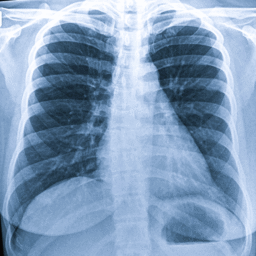

You are a healthy person. But you have been tired lately. Sluggish. You feel like you’re constantly fighting a cold. (You search “long Covid symptoms” and “do I have iron deficiency?” ChatGPT is inconclusive.) Your back hurts. Your neck hurts. Your doctor, if you can ever get an appointment, says, “It’s probably stress.” Or worse, “It’s aging.” And you do hear horror stories: influencers diagnosed with cancer in their 30s; a colleague whose relative died suddenly of an aneurysm; a school friend on Facebook fundraising for a transplant operation. Besides, what even is “healthy” anyway, except a brief and subjective reading on an unhelpfully diverse spectrum that stretches from immortality at the far end (still at least a few years away, the podcasts say) all the way up to a shockingly sudden and permanent death? No, the question you really want answered—the question all of us are in fact calculating at every moment in the fight-or-flight depths of our anxious brains—is ultimately: am I going to die soon?
Well, good news: thanks to an abundance of new technologies and tech billionaires having midlife crises, there have never been more private companies willing to take an informed stab at answering that question—which is how I find myself standing in my pants in a London location of Neko Health, as a dozen no doubt extremely high-definition cameras prepare to map every single imperfection on my (I’m now acutely aware, extremely imperfect) body.
Neko, for the uninitiated, is a Swedish “preventative healthcare technology” company cofounded in 2018 by Hjalmar Nilsonne, a 39-year-old energy entrepreneur, and Daniel Ek, the 42-year-old billionaire founder of Spotify. After making waves in its native Stockholm, Neko launched in the UK in 2024 and quickly built up a 100,000-person waiting list for its approximately $400 full-body scans. “We’re working as fast as we can to make it shrink and shrink, and I get at least one angry message per day about that,” Nilsonne tells me sheepishly. “It’s not like pushing an app on the app store and suddenly you have it all over the world.”
The urgency is real. Private medical screenings, once reserved for Harley Street clinics and the kind of secretive Alpine retreats frequented by the uber-rich, are exploding into the mainstream. Among Neko’s rivals are Prenuvo, the scanning firm recommended by Kim Kardashian, and Ezra, a Texas outfit endorsed by the supposedly ageless bodyhacking guru (and early body scan evangelist) Bryan Johnson. Ezra was recently acquired by Function Health, the buzzy medical testing company whose investors reportedly include Zac Efron, Matt Damon, and Pedro Pascal.
This is not your average check-up. For one, it requires learning a new vocabulary. Eager to know your apolipoprotein B score, or worried about your ferritin to albumin ratio? You can sign up with Superpower or Healf, which both offer advanced blood diagnostics for a monthly fee. Want medical-grade imagery of inside your every organ? There are companies for that too, with C-suite-sounding names like Executive Health, Ahead, Years, and Echelon. And for the private jet set, the options are virtually unlimited: hallowed longevity clinics like Switzerland’s Clinique La Prairie are now partnering with luxury hotels. At London’s Arts Club, members can make use of the nearby Lanserhof, with a treatment menu including a whole-body MRI for approximately $4,000. At the Surrenne club in Knightsbridge, whose advisory board includes the podcaster Andrew Huberman and the longevity author David Sinclair, you can have your DNA sequenced for upward of $1,100 (plus the over $13,000 annual membership). And for the truly advantaged, motivational speaker turned longevity guru Tony Robbins is opening The Estate, “a groundbreaking luxury hotel platform,” which, for around £26,000 per year, will offer extensive body scanning through Robbins’ company Fountain Life.
If it sounds like the future, that’s part of the sales pitch. The Neko branch I visit looks less like a medical centre than an Apple Store: sweeping cubist glass façade, hidden doors, all tastefully minimalist décor. After signing me in on an iPad, one of the few humans present leads me to a changing room, where I’m told to put on blue Jordan Hex slides and buttery off-yellow robes. My attendant, whom I’ll call Jen, shows me into a testing suite color-drenched in the same shade, which Neko says is “designed to foster a sense of calm.” Inside is a bed with a couple of sleek medical devices suspended above it, and beyond that there’s the 3D scanner, which looks like airport security as reimagined by Stanley Kubrick.
The cameras and other sensors, Jen explains, will take 2,000 detailed images before feeding my every mole and blemish into Neko’s software, which will shortly also contain blood samples; a laser-scanned map of my near-surface arteries; an electrocardiogram; a measure of my grip strength; eye pressure; and 50 or so million other data points gathered over the course of my 30-minute appointment. After that, a fully qualified doctor will sit me down to talk through my results, to not just tell me for sure whether I am a healthy person, but also quantify exactly how healthy I am.
But first, the scan. I pass my gown from behind the screen, and am instructed to stand with my arms out. It’s only as I’m hit by the kind of blindingly bright LEDs that film directors use to depict UFOs making first contact that I start to reconsider. What if they find something?
Being healthy used to be simple. In essence, we weren’t. Work was physical and life was cruel, so we self-medicated with God and alcohol and nicotine until we died young of an infectious disease. (I’m simplifying here, but only a little.) I’m not saying that ignorance was bliss, just that it’s ironic that it took the sanitized convenience of modern life to make us all freak out about dying.
Talk to founders in the body-scanning space, and they’ll tell you that the current boom can at least partly be attributed to the collision of the $6.3 trillion global wellness industry with what I will call the Longevity Podcast Industrial Complex. This movement—led by the likes of Johnson, Huberman and Peter Attia, and lavishly funded by middle-aged Silicon Valley billionaires ranging from Mark Zuckerberg and Sam Altman to Peter Thiel—treats health as less a necessity than a kind of algorithm to be optimized. “We have two audiences,” Emi Gal, the CEO of Ezra, tells me. “One audience is what we call the biohackers. These are the kind of longevity people who live in New York or Silicon Valley and who want to live forever.” (Gal was talking over FaceTime from Austin, Texas, which has become for longevity people what Los Angeles is to the wellness crowd: a spiritual home.)
“The fastest-growing audience, and the one that we think will enable us to scale much, much more, is what we call the ‘cancer conscious’,” says Gal. “These are people who recently had a cancer event in their family or close group of friends, and they’re scared that you can be 35 and get cancer.”
I sit in this category. Although I would never have called myself cancer unconscious, my relationship with it became more urgent two years ago, when one of my best friends was diagnosed with breast cancer in her mid-30s. As I watched her go through surgery, and then chemo and radiotherapy, I kept reading alarming reports about the rising cancer rates among young people. According to one British study, cancer incidences among 25- to 49-year-olds have risen 24 per cent since 1995, a sharper increase than any other age group. “It happens so much,” Gal says. Experts have speculated the rise could be down to everything from unhealthy diets to microplastics. Either way, as selfish as it sounds, it was hard not to think about myself. I am 36, descended from two generations of cancer survivors, and while I generally do consider myself a healthy person, I haven’t always taken the best care of my body.
I also have a chronic pain condition, which has meant that for the last few years I’ve had a front-row seat to the near-collapse of the UK’s healthcare system. “If you look at what’s happening in the healthcare system today, in the entire western world we’re really struggling to provide the kind of healthcare that most people would expect,” Nilsonne tells me. “When you look at what’s driving that, about 80 to 90 per cent of the cost and effort in our healthcare system is associated with chronic disease. But we have a healthcare system that was designed like a hundred years ago, really around the idea of infectious disease.”
Although Nilsonne is not a doctor, he was raised by a family of them. “Both of my parents, my grandfather, my oldest brother—that’s just the world that I grew up in,” he says. From them he learnt that healthcare is not welcoming of new ways of doing things: “because if you go in for heart surgery, the last thing you want is a creative heart surgeon.” He met Ek a few years ago at Brilliant Minds, the Spotify founder’s annual tech conference in Stockholm. At the time, Nilsonne was running Watty, an energy start-up. But Ek, who is a health fanatic (according to The New York Times, he reads medical papers for fun) convinced Nilsonne to get involved with Neko. The aim, he says, is to catch—and therefore prevent—disease as early as possible, by making full-body screenings fast and affordable. “We can, in under an hour, do things that would take five hours in a hospital,” Nilsonne says.
Once my 3D scan is over, I am instructed to sit on the bed. Jen measures my grip strength, takes blood samples, and then affixes ECG cables to my body. After that, one of the devices hanging from the ceiling begins scanning one of my forearms; this, I’m told, will check my microcirculatory system for signs of disease. It’s slick, a well-choreographed routine, and done in minutes. Afterwards, we’re joined in the room by a doctor—who does this alongside his National Health Service job, and whom I will therefore call Dr. House—who performs a quick examination. Then I’m told to put my clothes back on and come straight through for my results.
The consultation room looks more like a home cinema than a doctor’s surgery. Dr House pulls up my Neko scores on a screen. It’s good news: the scan found nothing alarming. My blood pressure is decent, “better than 50 per cent of Neko patients,” House says. (I had to brag.) My heart is healthy. My cholesterol is somehow “fantastically low” despite following a diet that has been known to approach critical levels of peanut M&M’s. Then Dr. House gets into the granular details: Hs-CRP, a marker of inflammation (optimal); HbA1C, a measure of my average blood glucose (optimal); neutrophils, basophils, and eosinophils, types of white blood cells, a high or very low score of which can be sign of disease (mine are also optimal). Then he pulls up my 3D scan, a wispy point cloud of my body in its underwhelming glory. I have 858 skin marks, Dr. House explains—moley, but nothing dangerous. And Neko stores the data, so that if I come for future scans, they can track any changes and quickly identify anything concerning.
In all, about 18% of Neko patients find something that requires medical attention. “For about one per cent of our scans, we find something immediately life threatening. For about 6%, we find serious undiagnosed conditions,” Nilsonne tells me later. Not terrible odds, then. Although one comment gives me pause: “In our life-threatening data, our one-percenters, about 70% are men.”
One of the curious details about the body-scanning market is that the customer base skews male. Ezra says that 56% of their members are men. “[And] I would say the biohacker camp is like 70% male,” says Gal. “It’s the Bryan Johnsons of the world.” Andrew Lacy, CEO and cofounder of Prenuvo, agrees: “Women will often present with, ‘I’m not feeling OK, I really need to get something checked out.’ I think men are attracted to what we do because this is a very comprehensive medical exam you can do without having to acknowledge that you are symptomatic or somehow weak.” The demographics cut against those of the traditional healthcare system, where preventative testing has often been focused on women’s health. “Women on average live three years longer than men, and one of the reasons for that is they do get more screening and more access to preventative services and early detection,” Gal says. “Mammograms and pap smears are two good examples.” Given that the biggest killers of men include heart disease and cancer, both of which can be treated more effectively if caught early, advocates in the space argue that regular scans could help save countless men’s lives.
Although my Neko results are encouraging, the scan is limited to conditions that can be identified by blood tests or show up at a surface level. Thus, my search for an even more comprehensive answer leads me to the new London outpost of Prenuvo, just off Oxford Street. Prenuvo, like Ezra, offers full-body magnetic resonance imaging (MRI). For a little over $2,600, it will image up to 33 internal organs, including the brain, lungs, heart, liver, pancreas, prostate and lymph nodes, all in less than an hour. (In the US, you can also add full bloodwork for an extra $2,000.) As MRIs can see inside tissue, they can help spot problems before they show up via other means. And because, unlike X-rays or CT scans, there’s no radiation involved, they can be repeated as often as needed.
Originally founded in 2018, Prenuvo’s star rose in 2023 after Kim Kardashian posted an Instagram pic of herself in one of its clinics, declaring that the company “has really saved some of my friends’ lives… #NotAnAd.” Kardashian found an undiagnosed brain aneurysm, and since then, several other famous customers have posted about their findings. TikTok and Instagram now abound with similar stories, often with the hashtag #prenuvopartner. It’s canny marketing—Prenuvo’s senior team includes former execs from Juul, WeWork and TikTok—and has helped the company expand rapidly across the US, Canada and Australia, with plans to open in Abu Dhabi, Dubai and Singapore.
If you have never had an MRI before, it is not fun. You are strapped to a bed, with a plate strapped to your chest and a headpiece over your face, with only a small window to see and breathe through. Then the Prenuvo technician pushes a button, and the bed slides into the scanner, where you will have to remain still for the next 45 to 50 minutes. Once the scan has started, the clunk and brrr of the machine is so loud it drowns out the Brooklyn Nine-Nine I have chosen to watch, so I squint at the subtitles, sweating and itchy. By the last 10 minutes I feel like Hannibal Lecter receiving brain surgery with a pneumatic drill.
Still, I’m told it’s worth it. “We are finding clinically actionable findings in about 5% of people— one in 20,” Prenuvo’s Lacy tells me. “We’re able to diagnose cancer at stage one, when it’s typically asymptomatic. And some of the biggest lifesaving [things] that we find are pancreatic cancer, when it’s still operable; ovarian cancer, when it’s still confined to the ovary; and lung cancer, particularly in young female non-smokers, which is growing quite fast.”
Lacy, who is Australian, launched Prenuvo in 2018, having previously worked in tech start-ups. The idea for the business came after he went for an MRI scan himself—his radiologist, Dr. Raj Attariwala, is Prenuvo’s cofounder. “People are coming to us because they’re worried they might have something,” says Lacy. “They might have indeterminate symptoms, and they’re not getting answers from the health system. So they’re being told either explicitly or implicitly that they’re fine, and they come to us to actually see if that’s true.”
There’s a word for people who feel like they’re sick, even when they’re told that they’re fine. “Hypochondriacs are one of those groups of people where, as a society, we’ve agreed that it’s OK to be mean to them,” says Nilsonne. “But also, anxiety is a very unpleasant feeling. So if you can help people not walk around with anxiety, then that’s a good thing.” And, while it’s a factor, he continued, “we wouldn’t have the waitlist we have now if it was only hypochondriacs.”
Traditional medicine misses diagnoses all the time, of course. Even when it does diagnose disease correctly, it can take too long. But critics of full-body MRIs argue that scans themselves can contribute to and even cause unnecessary anxiety. While they are useful for spotting abnormal tissue in the body, MRIs alone cannot definitively confirm whether a growth is cancerous or benign. A spot on the lung or colon could be a tumor, or it could be what radiologists call an “incidentaloma”—a benign polyp or cyst unlikely to cause harm.
“The older you get, the more abnormalities you find in the body,” says Dr Thomas Kwee, a radiologist at the University of Groningen. In 2019, Kwee co-authored a meta-analysis of the scientific research on preventative MRIs which found that 16% of the pooled patients received false positives—meaning they could have ended up undergoing further investigation that they didn’t need. (On the flip side, only 2% of patients in one study received false negatives, meaning that when there was something to see, the MRI almost always caught it.) Kwee is concerned about full-body scans leading to a massive surge in unnecessary follow-ups. “If you detect [something] in the neck and there’s a large artery running next to it, you have to do the biopsy there. Or if there’s something in the liver, you have to do a liver biopsy. All these have complications,” he says.
Then there’s the question of who pays for the follow-ups, particularly if patients take their private scan results back to the public system. “It puts a burden on the healthcare system,” says Kwee.
Body-scanning proponents argue the opposite: that by catching disease early, they can actually reduce healthcare costs. “For me to screen every adult [in the US] once every two years for cancer using these machines, everywhere in their body, it would cost me about $50–60 billion,” Lacy says. “That’s a huge amount of money, but we spend in the US over $120 billion [per year] on late-stage cancer drugs.”
Gal agrees. “Nobody would argue that mammograms are bad. Mammograms help save lives,” he tells me. (In fact, experts disagree about how beneficial they are.) In diagnostic medicine, scientists typically look at two measures: sensitivity (how good is a test at finding a problem that is actually there?) and specificity (how well can it deduce the absence of disease?). “Mammograms [typically] have an 88% sensitivity and an 85% specificity,” says Gal. “Our burden of proof is that we can do as well as or better than that.” Although Ezra hasn’t published official data yet, making it therefore unverifiable, he says, “[We’re] talking about 95, 96% sensitivity— almost no false negatives. And then the specificity is actually reasonably high as well, probably about 88 to 90 per cent.”
The pro-scan camp will argue, convincingly, that catching 95% of cancers, or dangerous aneurysms, is a good bet. The anti-scan camp will argue that, with 90% specificity, scanning 100,000 patients could lead 10,000 people into thinking they have—and require further investigation to confirm—a condition that they ultimately don’t.
And the bigger issue facing full-body scans is that there’s little evidence that when deployed at scale, they have any benefit at all. The American College of Radiology has declined to recommend it, and said in a statement that “to date, there is no documented evidence that total body screening is cost-efficient or effective in prolonging life.” Private insurers like Bupa currently do not cover it, or include it in their own screening programs.
The fight can get ugly. “A lot of the arguments you hear from doctors are not very evidence-supported, to be honest,” Lacy says. “In one moment they’ll ask us for evidence, but the objections are not based on any evidence whatsoever. It’s a little bit infuriating.”
Whichever side you fall on, Lacy is right about one thing: “Consumers aren’t waiting for the answer.”
How you feel about body scans—beyond your ability to afford one—is really a question of your tolerance for worry. In the days before and immediately after my Prenuvo scan, I probably spent more time anxious about my health than I would in a typical year. I had nightmares. I considered updating my will. In that moment I was Schrödinger’s hypochondriac: healthy and unhealthy at the same time. This, I’m told, is relatively normal. “As soon as you’ve done that scan, you’re like, ‘Fuck, do I have cancer? Do I have an aneurysm? Do I have something that’s going to kill me?’” says Gal. “You are waking up every morning refreshing your email and thinking, When am I getting that report?”
Similarly, Lacy says he has friends who could afford to get a Prenuvo scan but choose not to, nervous of what they might find. “The thing is, you have grown up in a health system where every story you hear about health is a horrible story,” he tells me. “Someone is fine until they’re diagnosed with a tumor. Or someone was great until they dropped dead of a burst aneurysm, or a stroke, or had a heart attack out of the blue. So why would you want to?”
The alternative story that the body-scan companies sell is one of control: if you know early enough, you might be able to stop the bad outcome. Treat the unknown; cheat death. In some cases, that’s undeniably true. But not always. Cancer is still cancer. Dementia is still dementia. To paraphrase the Final Destination movies, we all end up at the same place. Some see it coming, but for many of us, it arrives without notice. Control is not only about data; it’s also about agency. Knowing is only useful if you can do something about it.
A week after my scan, I go back to Prenuvo to get my results. I am too nervous to open the email. My doctor, Claudia Tailor, shows me into a small and business-like meeting room. The screen is broken, so we go through my results on her laptop. We talk for a while about my medical history – my pain condition, headaches, some gut stuff that has been troubling me. (Like Dr. House, Dr. Tailor works at Prenuvo alongside her job as an general practitioner, and it shows: her bedside manner is excellent.) Then she pulls up the results for my brain.
“On your MRI, we found something called an arachnoid cyst,” she says.
On TV, this moment would be visualized with a ringing noise and tunnel vision. In reality, I just voice a sweaty, “Mmhmmm!”
“Usually people are born with these, nothing concerning,” she continues. Oh, thank God, I think. Then, perhaps noticing my facial expression, she adds, “I just want to say there’s nothing concerning—nothing we think is cancer.” So yeah: I have a 1.5cm growth in the arachnoid layer of my meningeal membranes, one of the three layers that surround the brain and spinal cord. I am told, and have confirmed since with much googling, that it is rarely serious. “It is good to monitor these just to make sure they’re not getting bigger. If it becomes bigger, it can then cause pressure on the surrounding tissue,” Tailor says. Yes, no to the brain lump getting bigger. “In terms of the general health of your brain, it’s really, really good.”
We continue: I have polyps on my sinuses, likely related to my asthma and my allergies. I also have a polyp in my gallbladder, a cyst in my spleen, and another cyst in my back. “You’re just a polyp-y, cyst-y person,” Tailor says cheerily. “Lumpy.” They confirmed some wear and tear in my spine—which points towards my back pain. And that’s more or less it.
I leave feeling mixed emotions: relieved, worried, a little deflated. Prenuvo told me more about my body than Neko, or any regular doctor’s appointment. But it hadn’t told me everything. It didn’t point to any cause of my recent digestive issues. It didn’t find, as I’d secretly hoped, a physical injury to explain my chronic nerve pain. Nor could it answer the more prosaic questions that have been bugging me, like: is my memory getting worse? Is TikTok killing my attention span?
Of course, compared with many people, I am incredibly fortunate. “We have had patients even in this past couple of weeks [for whom] we found a very early form of pancreatic cancer,” Tailor told me. In another, an otherwise healthy man in his early 40s with kids, they found an aneurysm that could have ruptured at any moment. Prenuvo’s patients often write to them with similar stories, which the company anonymizes and shares in a Slack channel. Lacy reads some out to me. “This, yesterday: ‘You saved my life. Your scan found abnormal lymph nodes that turned out to be stage-three metastatic breast cancer,’” he says. “It’s happening three or four times a day now.”
I don’t have much time to process my results. Instead, I get straight on the train, for an appointment at a new start-up called Unbound. Unlike the other providers I’d signed up to visit, Unbound is designed as a place to hang out: its waiting room is not a clinic but a coffee shop, serving flat whites and CBD soft drinks. In the back, beyond the testing space, is a communal area where members can work, attend yoga classes or mingle with fellow healthy people at health-themed events.
Unbound is the brainchild of Miguel McKelvey, who previously cofounded the coworking empire WeWork. He’s very tall (6ft 8in), scruffy, and seems reassuringly ordinary for someone whose net worth Forbes estimates at $900 million. He calls Unbound a “testing and health practice platform.” “‘Practice’ is a weird thing to say, but health is a practice. It’s like yoga—you’re never going to be perfect at it,” he tells me. “The reason we have physical locations, and I’ll call it a platform for community and people, is because we think you’re not going to do that alone – that practice is something that’s better, in context, surrounded by others.”
Unbound, McKelvey says, came from his own experiences of being a successful guy in middle age (he’s 51). “I’m among the community of people who say, ‘I’m super wealthy, what do I do next? I want to live forever and want my brain power to be put into a machine that will benefit humanity for the rest of time,’ or whatever,” McKelvey says. “[But] that inclination hasn’t come for me at all.” Instead, he says, Unbound is rooted in the more everyday experience of realizing he’d neglected his health.
Like Neko, Unbound offers testing of key vital signs and blood markers—alanine aminotransferase, gamma-Glutamyl transpeptidase, lymphocytes, the various aforementioned -phils—that could indicate cancer, heart disease, or conditions like diabetes. But, says McKelvey, their screening is also rooted in more functional measures: “I can lift my heavy suitcase into the [overhead] compartment. Ten, 20, 40 years from now I would still like to be able to do that. So how do I monitor that?” Along with a blood test, Unbound performs a physical using a Power Plate sensor platform, which measures strength and balance, and a running test to check heart and lung health. “Our focus is: what can we help you with understanding now, that you might effectively change?”
McKelvey has tried Neko and the other scanning brands, and identified one of the stumbling blocks with physicals in general: laziness. Tell us we’re healthy, and there’s a good chance many of us will just coast. “It’s, ‘I found out I’m not going to die soon. So cool, I don’t need to worry about it any more, right?’” McKelvey says.
It is here that I must confess: a few years ago, for this magazine, I went to Italy to review an ultra-exclusive wellness hotel frequented by the extremely wealthy. There, between vitamin IVs, ozone therapy, and a colonic (don’t ask), I was subjected to detailed blood tests, a Dexa scan (which measures bone density and body tissue composition), allergy screenings, and much more. The upshot? Aside from needing more vitamin D and to cut out dairy, I was healthy. And the moment I left the hotel at the end of the trip, I went straight to the nearest gelato stand.
McKelvey’s bet is that being healthy is easier when there’s peer pressure involved than when you’re one person trapped in an MRI tube. As he envisions it, people will come to Unbound to hang out; he sees it as less like Neko, and more like a Hyrox or SoulCycle for medical testing. “Part of our vision is you come here for a board game night, and then you cycle through to get your test as you’re playing,” he says. He can see a future where Unbound has facilities in stores, or at high-end gyms. Of course, McKelvey is a real estate guy, not a doctor. But after weeks of reading about terrible outcomes delivered in lonely clinical rooms, I couldn’t help but like the idea of making the experience at least a little more friendly.
And there was something else I didn’t expect. At the end of my Unbound test, I was told to sit in a small padded room, where I put on headphones and listened to a guided meditation and therapy session. I was asked about my fears, hopes and dreams. Then I had to record a video of affirmation to my future self, theoretically to watch at my next appointment, in a year’s time. It was the first time I noticed that, for all of their technologies, none of the other scanning companies had acknowledged the biggest killer of men under 50 in the UK, which isn’t cancer or heart disease, but suicide.
You are a healthy person. So of course you want to know: should you get scanned?
The honest answer is: I’m still not sure. I will say that in the days since my results, I’ve thought a lot about something Kwee told me: that once you know, you can’t unknow. If you had a lump on your brain that is overwhelmingly likely to be benign, would you leave it at that? Or would you google it endlessly, looking up the chances it might grow (10 to 20%, FYI) and cause something worse? Wouldn’t you want to be certain? Then again, isn’t the desire for certainty what got us here in the first place?
For my part, both Prenuvo and Ezra’s founders seemed like true believers. Though body scanning is a lucrative market, they entered the field for personal reasons: Gal lost his own mother to metastatic colon cancer, and Lacy’s cofounder lost a close friend, a mother of four. For his part, Lacy tells me that one way to think about body scans is not just looking for health problems now, but to ward against those we might develop. “Many of us may get diagnosed with Alzheimer’s or dementia in 20 or 30 years. We can see the early stages of that with imaging decades in advance,” he says. “The earlier we identify this, the earlier you can make lifestyle tweaks to avoid the possibility of even arriving at that chronic stage.” And there may yet be unanticipated benefits. As body-scanning companies are now treating tens of thousands of patients, they’re also building a massive data set of the effects of modern life on our body. “A lot of us spend time at desks or looking at phones, and we are seeing spinal degeneration in people in their 20s that’s what you’d expect to see with someone in their 40s,” Lacy says. “What will be the state of their spine when they turn 50, or 60?”
The thing that ultimately transforms full-body scans from a niche into something that everybody will use is AI. The more data fed into the system, the better AI becomes. AI can also enhance lower-quality MRI images, meaning faster and cheaper scans: in the US, Ezra’s full-body MRIs now start at $499. “Our prostate AI, which helps identify prostate cancer, has a higher accuracy than radiologists already,” Gal tells me. (Ezra’s data is unpublished, but independent researchers have shown similar results.) “It’s superhuman in its ability to identify lesions in the prostate. However, I see no future ever when AIs are fully doing the work on behalf of or replacing the radiologist, because the radiologist will always need to do the sort of more human part.” That is: breaking the bad news.
I’m lucky. After my scan, Dr Tailor said she would write a letter to my doctor, recommending an ENT referral for my sinus polyps. (They’ll stick a camera up there to check they’re benign.) For the cyst in my brain, the recommendation is to do another scan in a year or two, to check it isn’t growing. “You don’t need to lose sleep over it,” Tailor told me. At Unbound, my physical and mental health results were fine, though my blood tests were partly inconclusive due to my having an unusual haemoglobin type, and my liver readings concerning (most likely reflecting the fact that I’d been at an ill-advised party the night before). Neko’s recommendations turned out to be painfully obvious: maintain a balanced diet; avoid dairy; continue going to the gym; use SPF whenever possible.
Even some in the space seem conflicted by where this is all heading. At Unbound, for example, McKelvey is reluctant to go as far as some scanning companies. “If you save one person’s life from this, is it all validated?” he says. “This is the part which I really struggle with… I don’t know. I think that’s going to be an interesting argument. What’s the justifiable percentage of problems you create versus people you help?”
Unfortunately, there is still no test that can tell you definitively, 100%, whether you’re going to die soon. I could be hit by a bus tomorrow. But I can at least confirm in the most exhaustive possible way that I am a healthy person, for now.
A version of this story originally appeared in the February 2026 issue of UK GQ with the title “Looking for Trouble.”
Hair by Takumi Horiwaki
Make-Up by Megumi Matsuno using Dr Barbara Sturm
Casting Direction by Mc Barnes
Models, Paco Diouf at Next London and Iggy Thomas at Wilhelmina London
Original source: us