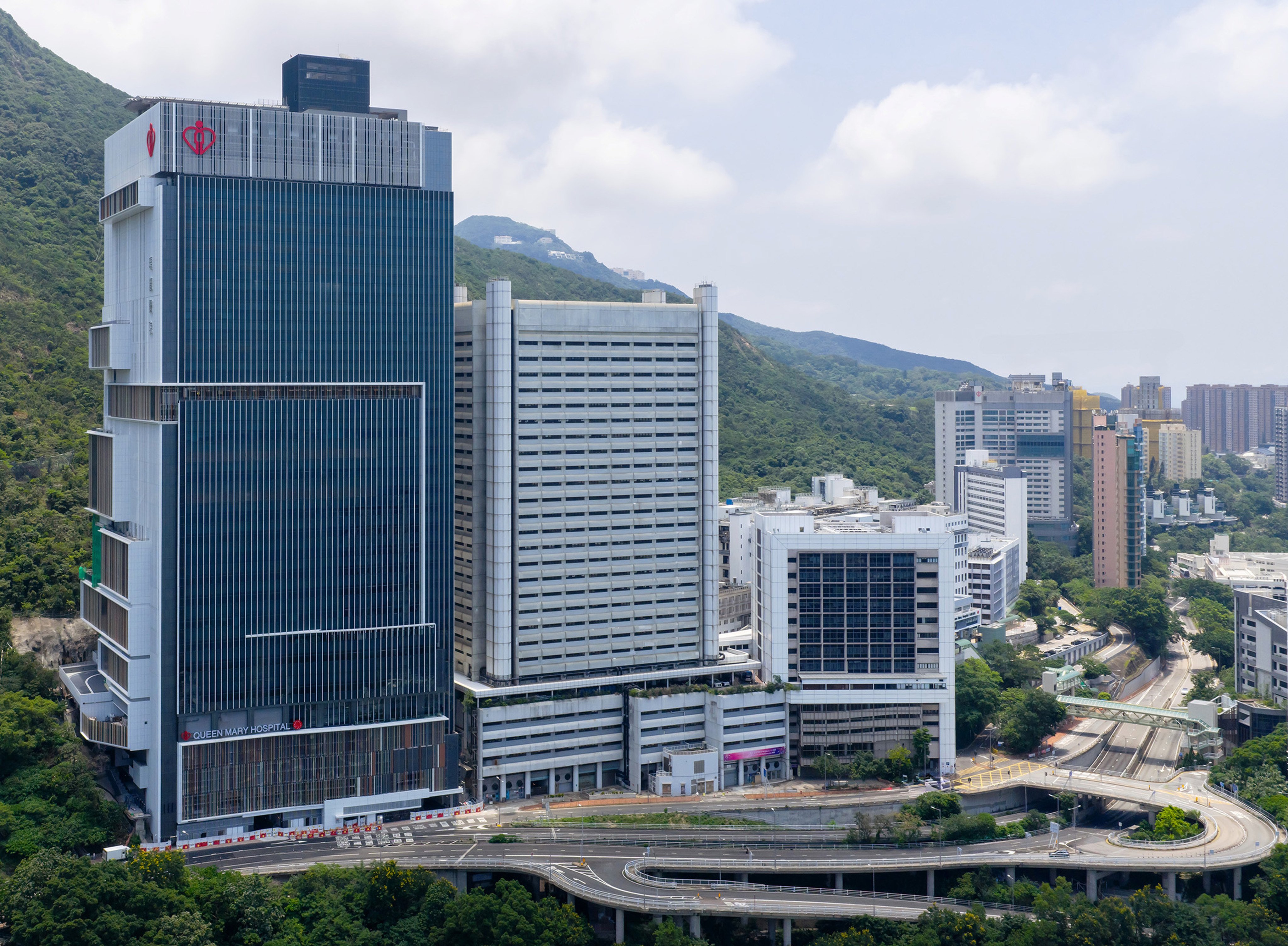
The Hong Kong government has demanded that a contractor rectify faulty lifts in a new block at Queen Mary Hospital after multiple glitches delayed the launch of all clinical services at the building.
A veteran electrical and building services engineer said it was unusual for 24 out of 28 lifts in a new building to malfunction, while a lawmaker said the situation involving Anlev Elex Elevator was “unacceptable”, warning it could further delay completion of the HK$13.5 billion (US$1.72 billion) redevelopment project at the hospital.
Authorities have reserved the right to pursue claims for losses, according to a joint reply by the Architectural Services Department (ASD), Electrical and Mechanical Services Department (EMSD) and the Hospital Authority to the South China Morning Post on Wednesday.
Officials attributed the delayed launch of services at Clinical Block 1 to “defect rectification” of its lift works and negative-pressure systems, expecting repairs to finish within the fourth quarter of this year.
Clinical Block 1 forms part of the first phase of the multibillion-dollar redevelopment project at Queen Mary Hospital, the largest public hospital on Hong Kong Island. Construction of the 34-storey building commenced in 2018 and was completed in 2025, and clinical services were originally expected to begin relocating there from the end of last year.
The block is designed to house the accident and emergency department, emergency medicine and inpatient wards, the diagnostic radiology department, a peri-operative centre, cardiac catheterisation laboratories, and intensive care units.
A source told the SCMP that of the 28 lifts in the block, only four were operating after a series of lift failures over the past few months. In one incident, a lift plunged two to three floors.
The source added that escalators in the block, which were maintained by the same contractor, had also malfunctioned.
Currently, only non-clinical facilities are open in the building, including restaurants, convenience stores, and laboratories. The blood bank on the 16th floor is also operational.
Between July 2025 and June this year, a total of seven lift equipment failures in the block were reported to the EMSD, accounting for 28 per cent of all lift issues reported across the city. Six involved passengers trapped due to electrical or component faults, while one involved a passenger tripping because of a levelling inaccuracy caused by an electrical fault.
In July last year, a worker carrying out power supply maintenance on a lift in the building died after being trapped in its shaft for nearly two hours after the lift suddenly descended and crushed him.
A hospital employee said that although no clinical services were relocated to the building, many of them visited the restaurants there. He said staff felt anxious, with many afraid to take the lifts and preferring to use the escalators instead.
Another staff member said he had been marked late for work due to the suspension of lift services.
Veteran electrical and building services engineer Ho Wing-ip said he was surprised by the glitches, noting that only about a seventh of the lifts were currently operational. He called on authorities and the contractor to thoroughly investigate the causes and keep the public informed.
Ho said that if several lifts were experiencing similar problems, such as levelling faults, the problems could stem from components that command and control the stopping mechanisms. However, they suffered from a variety of glitches, it could point to broader quality issues across the entire batch of lifts, he added.
He attributed the eight-month delay in resolving the issues to a shortage of labour in the lift maintenance sector.
He stressed that commissioning a lift required thorough and rigorous testing and inspection, but believed the glitches did not pose safety concerns since the problematic lifts had been taken out of service.
A government spokesman on Wednesday said the ASD and the EMSD previously found that the installation and operation of lifts in the block had failed to meet the performance requirements set out in the contract.
He said the department instructed the contractor responsible for the lift works to complete the necessary rectification promptly and properly, adding that some lifts have already completed detailed inspections and would return to service shortly.
Additional costs incurred in the rectification works were borne by the contractor, and the government reserved the right to pursue claims for losses and the impact caused by project delays, while recording the contractor’s performance as a reference for future tenders, he added.
“Hospitals are critical medical facilities; both the ASD and the Hospital Authority have always adopted an extremely rigorous approach in accepting various works,” the spokesman said.
“Clinical facilities that provide direct patient services will begin operation gradually only after ensuring the safety of patients, the public, and staff, and confirming that all facilities meet the relevant safety and operational requirements.”
Anlev Elex Elevator is the registered contractor for the building’s lifts, according to the EMSD’s website. Its parent company, ATAL Engineering, was founded by Otto Poon Lok-to, the husband of former justice secretary Teresa Cheng Yeuk-wah.
The company currently holds a three-star service quality performance rating out of five, indicating no safety non-compliance, with a service quality performance index of between 90 and 99 out of 100.
Over the past five years, Anlev has received three contracts from the Hospital Authority totalling more than HK$111.8 million for the comprehensive maintenance and repair of lift installations.
Over the same period, it also secured five contracts worth around HK$370 million for similar work at government premises.
Lawmaker Chan Hoi-yan described the situation as unacceptable and expressed concern that it could hinder the progress of the redevelopment project.
“We are not talking about a hundred dollars but tens of billions … this is a very serious problem when the hardware has been completed, but the public and patients cannot use it,” Chan said.
“Problems should not only be discovered after the building is already open. There should have been proper site supervision and inspections in place.”
She stressed that the block should begin full operations only when the lifts can operate safely, warning that failing to do so could jeopardise healthcare and emergency services.
Chan also called on the Hospital Authority to maintain transparency by telling the public the timeline for the block’s full operations and whether it would seek compensation from the contractor.
Original source: hk