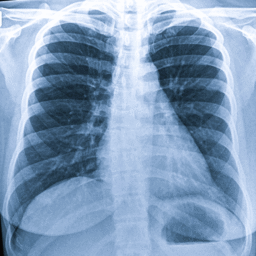

In May, my daughter will begin her journey into medical school in Kano. She is among over 1.9 million students who sat for JAMB last year and among the fortunate few admitted into their first-choice degree programmes. She is full of dreams, purpose, and promises. She represents thousands of bright minds stepping into higher education across Nigeria, carrying the hopes of families who still believe that a degree is a reliable ticket to a stable future.
Sometimes, during our after-dinner conversations, I tried to draw her attention to the “unknown unknowns” regarding the influence of artificial intelligence on future careers. This is because we are entering an era defined not just by change, but by acceleration. AI is not waiting for institutions, governments, or professions to catch up. It is already reshaping them.
Many school leavers, parents, and guardians overlook one important reality: knowledge is no longer scarce. For generations, universities have been custodians of knowledge. Today, however, knowledge has become abundant, searchable, and increasingly automated. I often remind her that, already AI systems can diagnose diseases faster than many doctors. With just a few prompts, they can draft legal briefs within seconds, translate languages in real time, write articles, Friday sermons, and even academic papers. This directly challenges traditional professions such as medicine, law, journalism, academia, and even religious leadership. Voices such as Elon Musk have gone further, predicting that AI-powered robots could outperform human surgeons within a few years. Whether or not this timeline proves accurate, the direction is undeniable. But here is the crucial truth: AI is not replacing humans; it is replacing humans who do not evolve.
Therefore, our universities must focus on producing graduates who can adapt to this new reality. Higher education has traditionally promised three things: knowledge, skills, and attitude. The appropriate combination of these differentiates good graduates from great ones—those capable of solving societal challenges. In the AI era, however, their importance is being reordered. Knowledge is now a commodity. Simple memorization is losing value because AI can recall more information faster and more accurately. Skills, on the other hand, are becoming the true currency. What you can do matters more than what you know. Ultimately, attitude becomes the defining factor. Instead of the traditional order of knowledge, skills, and attitude, the new hierarchy is attitude, skills, and knowledge. Your mindset determines whether you remain relevant or become obsolete. As I share these thoughts with my daughter, I also reflect on the wider society in Northern Nigeria and wish that all school leavers were guided to develop the right mindset.
Let me further illustrate the importance of attitude. Northern Nigeria, like much of the country, still maintains a cultural divide between “white-collar” (prestigious, office-based) and “blue-collar” (manual, technical) jobs. This distinction is rapidly becoming obsolete. The future belongs to high-skill workers; not merely white-collar workers. A robotics technician may soon earn more than a traditional administrator, and a skilled biomedical engineer may outpace a general physician.
During my time at a university in the Middle East, I observed that a glassblower in the Chemistry Department earned more than a professor. More recently, in my laboratory at Ahmadu Bello University, a gas chromatograph malfunctioned. I could not find anyone within my locality to repair it. Eventually, an instrument technician from Ibadan charged more than the annual salary of my laboratory technician to fix the equipment. Parents should take note: today, the real question is no longer, “What degree do you have?” but rather, “What problem can you solve, and how well can you solve it?”
Returning to my daughter’s journey into medical school, she once asked me, “Will AI replace doctors?” My answer was “no”. But I immediately added that AI will redefine what it means to be a doctor. According to experts, AI will dominate tasks such as diagnostics (radiology and pathology), drug discovery, routine consultations, and medical record analysis. Already, AI systems outperform humans in analysing medical images to detect cancer. This week, in its series “A.I. Friend or Foe,” CNN demonstrates how AI can accelerate drug discovery from years to mere months. This makes the process cheaper, faster, and more efficient.
The good news is that Nigeria’s current reality presents unique opportunities for innovation and profitability. While AI threatens traditional job structures globally, it also opens up massive opportunities, especially in developing regions such as Northern Nigeria. Why? Because of existing inefficiencies: weak healthcare access, poor infrastructure, educational gaps, and agricultural inefficiencies. These are not just problems; they are opportunities for innovation. A student who combines disciplines; such as Medicine and AI, Agriculture and Data Science, or Engineering and Renewable Energy can develop solutions that are both locally relevant and globally scalable.
I have simple advice for students seeking to thrive in the AI era: (i) Learn beyond the curriculum. University lectures alone are no longer sufficient. Most university lecturers were trained in the analog-era. Students must take online courses (AI, coding, data analysis), build personal projects, and pursue internships early. (ii) Acquire hybrid skills. The most valuable graduates will operate at the intersection of disciplines. (iii) Learn to work with your hands. This is especially critical in Northern Nigeria. Students must be able to build, repair, design, and experiment through laboratories, workshops, and fieldwork. (iv) Develop problem-solving ability. Instead of asking, “What job can I get?” students should ask, “What problem can I solve?” (v) Cultivate the right attitude. Adaptability, curiosity, discipline, and a lifelong learning mindset are essential. The future will reward those who continuously evolve.
Beyond students, lecturers and universities must also act. The current model of higher education in Nigeria is under pressure. It is telling that many graduates now claim that “education is a scam.” To remain relevant, institutions must; shift from teaching to coaching, embed practical learning through real-world projects and industry partnerships, integrate AI across all disciplines and encourage entrepreneurship and innovation. In 2023, the National Universities Commission introduced the Core Curriculum and Minimum Academic Standards (CCMAS), which addresses many of these issues. Unfortunately, its implementation remains limited. This is simply because CCMAS requires LecturersV2.0.0; while we still have LecturersV1.0.0.
Finally, parents and guardians must also evolve. The old formula – school, degree, job, stability; is no longer guaranteed. Instead, we must encourage curiosity, support experimentation, and value practical competence as much as academic achievement.
In the coming decades, the most successful individuals will not be those with the best degrees, but those who combine intelligence with action, leverage technology effectively, and solve real problems for real people. If all goes well, my daughter will be ready to dragonise diseases by 2034. Like many parents, I hope she will not compete with AI. But will use it to excel and lead in her medical career.
El-Yakubu is a Professor of Chemical Engineering, Ahmadu Bello University Email: [email protected]
Original source: ng