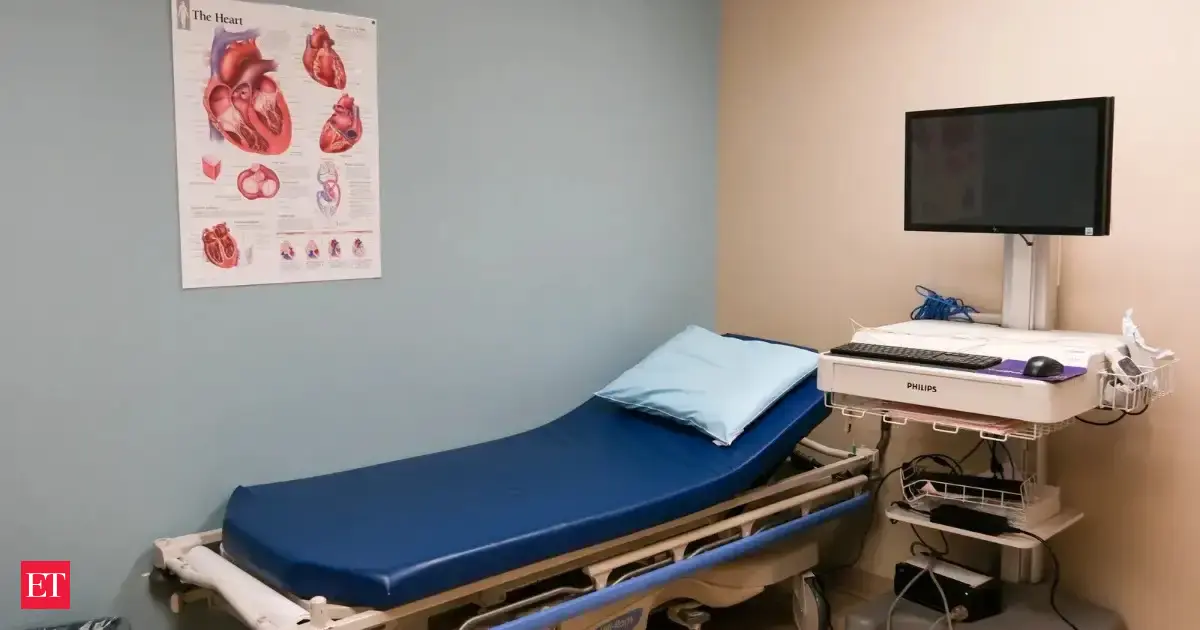
ReutersAn exam room in a Community Hospital
Postgraduate (PG) medical seats in Delhi are set for a substantial increase as the government moves to integrate key state-run hospitals, a step aimed at expanding specialist training capacity while strengthening healthcare delivery.Also Read: Indian medical aspirants turn to Philippines over better exposure, affordable costsChief minister Rekha Gupta said the proposed integration will enable better utilisation of faculty strength—an important factor that determines PG seat allocation under medical education norms.Under the plan, Guru Teg Bahadur Hospital, Delhi State Cancer Institute and Rajiv Gandhi Super Speciality Hospital will be brought under a single autonomous structure, modelled on the All India Institute of Medical Sciences.Pooling faculty to drive seat expansionOfficials said the move seeks to address fragmentation of departments and manpower across these institutions, where faculty and infrastructure are currently underutilised.Live EventsBy combining faculty strength across levels—assistant professors, associate professors and professors—the integrated system is expected to automatically raise PG seat capacity, as per regulatory norms linking faculty numbers to student intake.Several departments are likely to see a significant increase. Radiology seats could rise to around 22, pathology to nearly 26, and anaesthesia may go up to about 48 seats. The expansion will also be supported by filling existing vacancies in teaching positions.New courses, super-speciality focusThe integration is also expected to enable the launch of new PG programmes in specialised disciplines that currently lack such courses.At Delhi State Cancer Institute, around 26 seats are likely to be added in areas such as radiation oncology, nuclear medicine, cancer research and intensive care.Similarly, Rajiv Gandhi Super Speciality Hospital is expected to introduce about 14 seats in super-speciality fields including cardiology and cardiac surgery.Push for mental health, future MBBS expansionIn a parallel move, the government is working to upgrade the Institute of Human Behaviour and Allied Sciences into an institution on the lines of the National Institute of Mental Health and Neurosciences, which is expected to boost postgraduate training and research in mental health.Officials said the integrated model will also lay the foundation for increasing MBBS seats in the future, as improvements in bed capacity, patient load and faculty strength help meet eligibility norms.Also Read: Delhi HC allows NEET-PG candidates to join SPMD counselling, says non-joining of stray vacancy seat not a barThe government plans to back the expansion with investments in academic infrastructure, including hostels, lecture halls and modern laboratories.Gupta said the initiative is part of a broader push to position Delhi as a national hub for medical education and research, while also strengthening its public healthcare system.(With inputs from TOI) Add as a Reliable and Trusted News Source Add Now!
(You can now subscribe to our Economic Times WhatsApp channel)
Read More News onDelhi postgraduate medical seatshospital integration Delhispecialist training DelhiDelhi State Cancer Institutemedical education expansion DelhiRajiv Gandhi Super Speciality HospitalDelhi healthcare delivery
(You can now subscribe to our Economic Times WhatsApp channel)Read More News onDelhi postgraduate medical seatshospital integration Delhispecialist training DelhiDelhi State Cancer Institutemedical education expansion DelhiRajiv Gandhi Super Speciality HospitalDelhi healthcare delivery
Prime ExclusivesInvestment IdeasStock Report PlusePaperWealth Edition123View all Stories
Original source: in