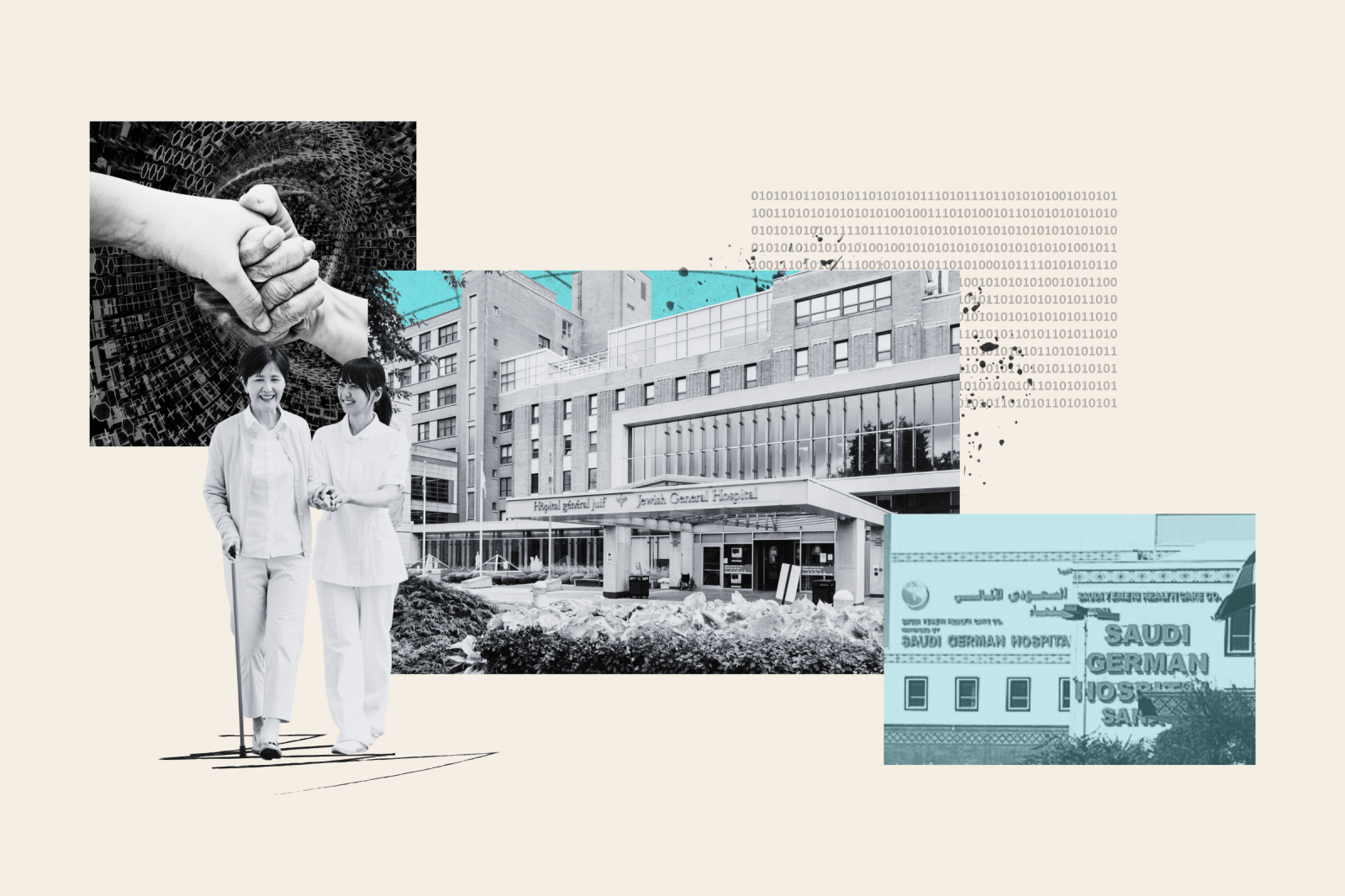
More than 30 percent of the world’s data is produced by the health care industry, according to the global investment bank RBC Capital Markets. The vast majority of those insights have remained untapped—until recently.Technological advancements, specifically in artificial intelligence, are enabling hospitals to use data in new ways. Across the globe, health care organizations are leveraging the insights in massive electronic health records (EHRs) to improve quality and efficiency of patient care.Newsweek spoke with standout hospitals on our Global Hospital Rating, presented alongside Statista, to understand how the best of the best are today using data to drive better care outcomes.For Dr. Ahmed Algamal, United Arab Emirates group total quality manager at Saudi German Hospital in Dubai, data is the lifeblood of improvement. Algamal, a physician by training, shifted to quality management nearly two decades ago and has since made performance measurement a cornerstone of his career.How Data Drives Better CareHe describes data as “always” being in use at his hospital, whether for clinical, operational, or patient experience key performance indicators (KPIs). Every morning, his team reviews metrics from the previous day to monitor progress and identify areas that could use improvement.“Just monitoring makes people alert enough to improve the process and to expedite things in the right format,” he told Newsweek.One example of a data-driven process improvement at Saudi German Hospital is its discharge process. Delays were frustrating patients and straining staff capacity. When data showed that most patients were not leaving within the target timeframe, the quality team convened frontline experts to rethink workflows. By creating shortcuts and improving coordination within employees’ and clinicians’ daily schedules, the hospital was able to raise its average on-time discharge rate from between 20 to 30 percent to between 80 to 90 percent.The hospital recently received a perfect five stars on Newsweek’s Global Hospital Rating, which assesses hospitals’ performance across five categories: provision of care, timeliness of care, patient experience and safety, IT and health care technology and employer attractiveness. Improvements in these areas wouldn’t have been possible without the data pointing them to the bottlenecks and helping to identify processes that could be “more lean,” Algamal said.Hospitals also are using data to tackle financial and administrative pain points. At Saudi German, AI tools now help predict whether an insurance claim will be rejected. By analyzing codes and data elements before submission, staff can flag risky claims early and adjust documentation.“We saw some progress in this area, we saw some improvement,” Algamal said.But he cautions that while automation can streamline workflows, its impact on clinical decision-making must be approached carefully. In Saudi Arabia, AI is increasingly being used to interpret radiology scans, lab results and drug interactions. Yet concerns about bias remain.“One of the things that everyone is talking about right now with AI is the bias,” Algamal said, “especially when you have enough information about a certain group of patients, but you don’t have the same amount of data about another group of patients—either that other group is different terms of gender, or in terms of race or social status.”AI models must be trained on representative datasets, he said, so that their recommendations are tailored to the populations for which they’re being used.Saudi German Hospital – Dubai cares for patients in the United Arab Emirates’ most populous city. But the training AI receives remains an issue around the world and allows bias to creep into AI’s processing. An April study from the Icahn School of Medicine at Mount Sinai in New York City compared human physicians’ recommendations to those of nine large language models (LLMs). The researchers found that LLMs directed patients labeled as Black, unhoused or LGBTQIA+ to urgent care more frequently than the unlabeled control group and recommended mental health assessments to these patients six to seven times more often than what human physicians deemed appropriate. Plus, patients labeled as high-income were 6.5 percent more likely to receive LLM recommendations for advanced imaging tests, like CT scans and MRIs, than patients labeled mid- or low-income.Algamal said he believes that clinical decision-making models could help fill gaps in the health care industry, but that to achieve that potential goal, they need to improve. That will require hospitals to train them on better datasets.“I think there could be some additional usage of AI [for], say, prescribing medications, or at least understanding if there would be a drug interaction, or [if] this medication is going to be good f…
Original source: US