In an interview on Skip Bayless and The Arena Gridiron Crew, Cowan defended his motivation. “I haven’t sold any products with this,” he said. “I do direct people to my website, which is a free app right now. I’ve stopped taking any paid work right now so I can work on media. I’m losing money from this. I’m being called a conspiracy theorist.”
Cowan added that his interest was personal and rooted in his own experience working around wireless equipment. “I worked for a wireless company, and I got sick when I was working there doing software engineering for high-powered Wi-Fi modems,” he said. “It’s personal for me. I want people. I care about people’s health, I care about the players’ health. I’m a fan of the team.”
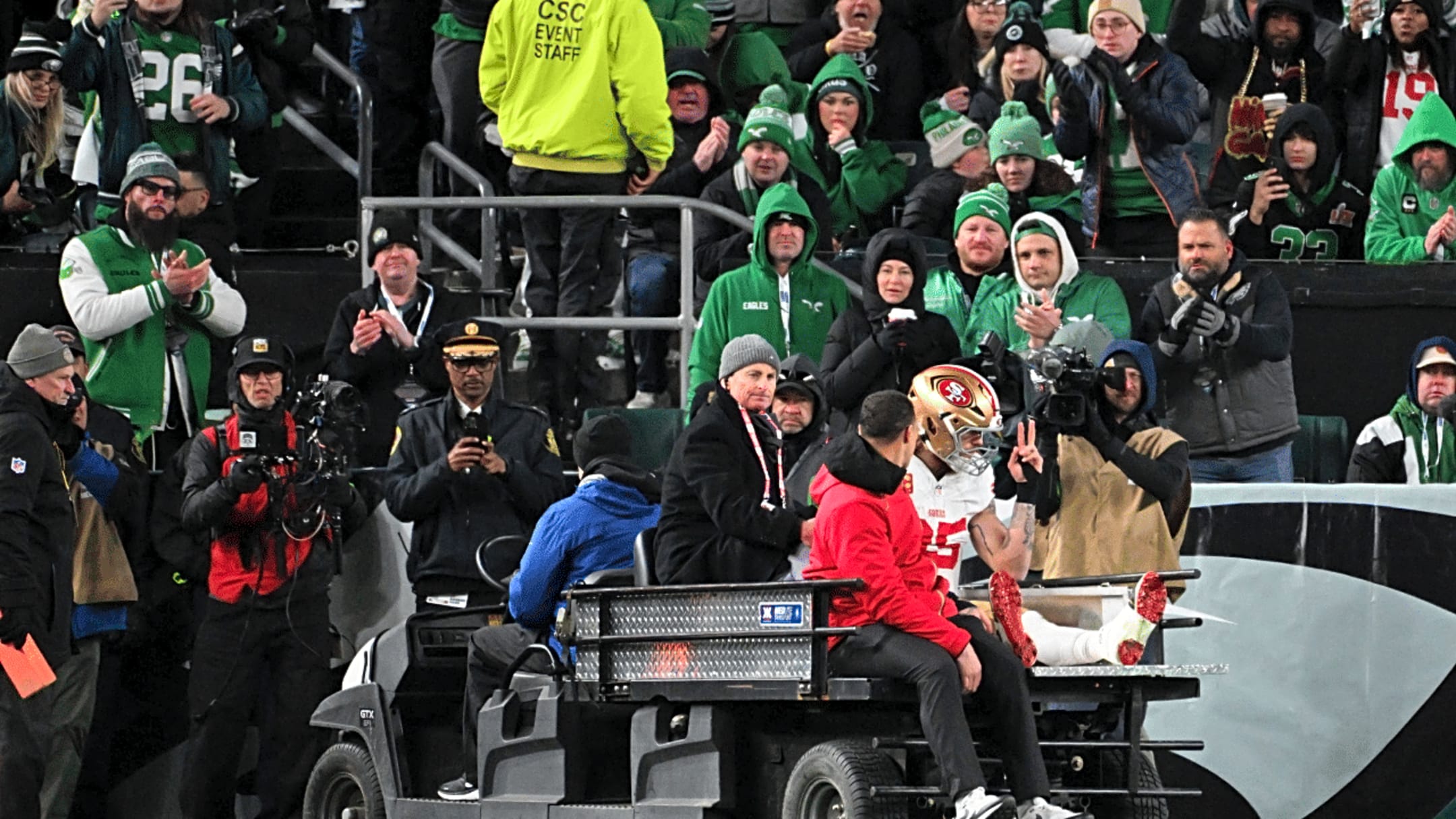
He specifically referenced Kittle’s injury while explaining his concern. “Just seeing Kittle down with a non-contact tendon rupture, which is exactly what I was writing about the other day, it’s a bummer,” Cowan said on the program. “I’m here because I want to help, and I’m down to engage with anybody who wants to engage in good faith.”
The idea isn’t entirely new in the 49ers locker room. Players have occasionally joked about the massive substation that sits just beyond the practice fields in Santa Clara. Wideout Kendrick Bourne even laughed about it with reporters last week, joking it’s “that power plant” when asked about the frequent injuries.
On social media and his blog, Cowan argues that chronic exposure to low-frequency EMF might interfere with cellular repair, collagen strength, and hormone regulation, all factors critical to tendons and ligaments.
Frank de Vocht, professor of epidemiology and public health at Bristol Medical School and a leading EMF researcher, dismissed the connection as “nonsense.” Jerrold Bushberg, radiology professor at UC Davis and chair of the National Council on Radiation Protection and Measurements, echoed that view, explaining there is “no firmly established evidence” that the type of fields produced by substations has any biological impact capable of causing injuries.
“These mechanisms have not been established,” Bushberg said. “Many of the experiments cited involve exposures far higher than anything an NFL player would experience.”
There’s also an inconvenient historical detail: the 49ers have practiced next to that same substation since 1988, including during some of the healthiest and most successful stretches in franchise history.
Sports medicine specialists point to far less mysterious explanations for San Francisco’s two-year injury nightmare. The NFL has never been more violent, with larger athletes producing greater forces on joints. The ongoing debate over artificial turf versus natural grass continues to suggest higher lower-body injury rates on synthetic surfaces.
Add in condensed schedules, year-round training, and simple statistical misfortune, and clusters of injuries become easier to understand. Achilles tears like Kittle’s are typically linked to age, cumulative load, and explosive change of direction, not environmental radiation.
Still, Cowan insists the conversation shouldn’t end. He welcomes formal studies and says he’s open to being proven wrong. “I’m here to engage in good faith,” he said. The 49ers, meanwhile, must navigate a playoff run without one of their most important players, regardless of what caused his injury.
Original source: us