“The ceasefire between Iran and the US is unequivocally a ceasefire on all fronts, including in Lebanon,” Araghchi said. “Its violation on one front is a violation of the ceasefire on all fronts.”
The warning followed comments from Mohammad Bagher Ghalibaf, Iran’s parliament speaker, during a call with Lebanese Parliament Speaker Nabih Berri. According to Iranian state media, Ghalibaf said any agreement to end hostilities between Iran and the United States would require an end to attacks across the region, with Lebanon at the centre of those demands.
He said Tehran had worked towards ceasefires in regional conflict zones and warned that if Israeli attacks continued, Iran would halt dialogue and confront Israel directly.
Iranian media later reported that exchanges of messages between Tehran and Washington through mediators had been paused. Officials stopped short of declaring negotiations dead but signalled that progress would depend on developments in Lebanon.
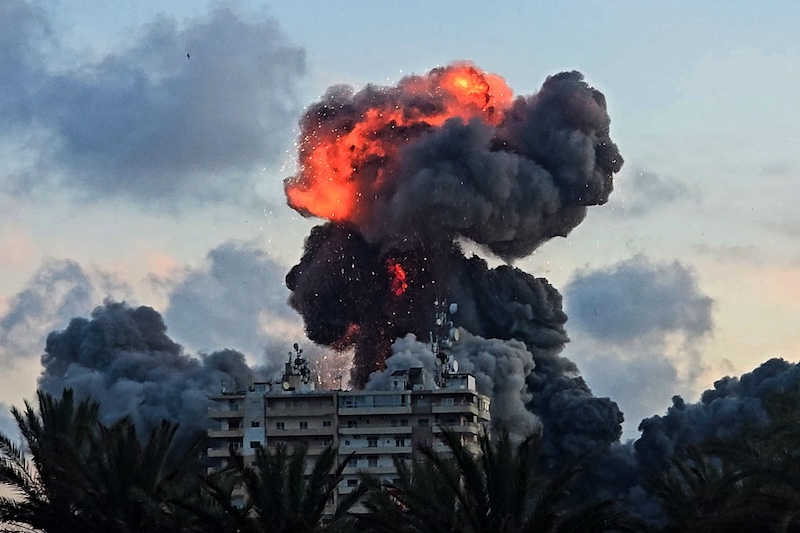
The dispute comes as Israeli military operations and illegal occupation have expanded in southern Lebanon. According to Lebanese military sources, Israeli forces crossed the Litani River and advanced towards the outskirts of Nabatieh, one of the largest cities in southern Lebanon.
The invasion marks the first reported Israeli advance beyond the Litani since 2006.
Nabatieh holds strategic and economic importance and has long been viewed inside Lebanon as a centre of resistance to Israeli military campaigns. Lebanese and regional media reported that Israeli troops appeared to be attempting to isolate the city while increasing pressure on Hezbollah positions.
Lebanon’s Prime Minister Nawaf Salam described the offensive as a “dangerous and unprecedented” escalation and called for an immediate ceasefire.
In a televised address, Salam said military escalation would not bring security and defended direct talks with Israel as the least costly option available to Lebanon.
The fighting has continued despite ongoing negotiations between Lebanese and Israeli officials in Washington.
Israeli forces have also issued new forced evacuation orders covering multiple communities in southern Lebanon. Residents were instructed to move north of the Zahrani River as military operations expanded.
Lebanese officials say more than one million people have been displaced since the conflict escalated. Aid groups have reported mounting pressure on healthcare facilities and emergency services.
Doctors Without Borders said an Israeli strike near Jabal Amel Hospital in Tyre caused extensive damage to medical departments and disrupted treatment for patients. According to the organisation, the attack damaged operating rooms, intensive care facilities and radiology equipment.
Lebanon’s Health Ministry reported deaths and injuries in several areas of the south during the latest round of attacks. Local authorities also reported strikes near Tyre, Tebnine and other communities.
Hezbollah has continued attacks against Israeli forces. The group said it carried out a series of operations targeting troop positions, military vehicles and command centres in southern Lebanon. Israeli authorities reported drone alerts and missile interceptions in northern Israel.
The developments have complicated efforts by US President Donald Trump to maintain negotiations with Tehran while containing the conflict in Lebanon.
Trump rejected reports that contacts between Washington and Tehran had ended and insisted discussions remained active.
“Conversations between us have been going on continuously,” Trump said on social media.
He also claimed to have secured commitments from both Israel and Hezbollah to reduce hostilities. Israeli Prime Minister Benjamin Netanyahu, while confirming discussions with Trump, said Israeli operations in southern Lebanon would continue.
“If Hezbollah does not cease attacking our cities and citizens, Israel will attack terror targets in Beirut,” Netanyahu said.
Iranian officials have repeatedly stated that any future agreement requires guarantees that military action will stop not only against Iran but also against its regional allies.
Iranian officials insist Lebanon remains a central condition for continued negotiations. Speaking in Tehran, officials said they required tangible proof that military operations were ending and not merely verbal assurances.
Original source: fi