
In the first of a six-part Health Matters wellness series on cancer in Hong Kong, Emily Hung looks into how the city takes on its leading cause of death while maintaining one of the lowest mortality rates in the developed world and what more it must do to excel as a hub for cancer research.
When Hong Kong began modern cancer tracking in 1983, it recorded 15,000 new cases and a far higher death rate than today.
Four decades on, the number of cases has more than doubled to 38,000, yet the risk of dying from the disease has nearly halved. In 1983, the city’s age-standardised cancer death rate stood at 136.7 per 100,000 people. By 2023, it had fallen to 71.1.
Cancer remained the city’s top killer in 2023, claiming nearly 15,000 lives – more than a quarter of all deaths – according to the latest official data. Its mortality rate, however, is among the lowest in developed economies.
The average across Organisation for Economic Cooperation and Development (OECD) member countries was 191 deaths per 100,000 people. Meanwhile, Japan and South Korea recorded rates of 174 and 150, respectively, according to the latest data available.
Experts attributed the success to Hong Kong’s access to world-class drugs and treatments, but warned that the city must invest more in early prevention and screening to truly lead in cancer management.
In interviews with the South China Morning Post, they said Hong Kong’s next battle was “stage migration”, diagnosing cancer earlier to improve survival rates and reduce healthcare costs.
“When you are not dying from war or tuberculosis and when cardiovascular events are prevented, the only thing you’re going to get is cancer,” said Professor Tony Mok Shu-kam, chairman of the clinical oncology department at the Chinese University of Hong Kong (CUHK).
“When our median age for females reaches 88, and that for males 82, we will inevitably see more cancer cases … so it is not as worrying as some suggest.”
Hong Kong issued its first Cancer Strategy in 2019, a framework aimed at reducing the local burden and mortality, while improving patients’ quality of life by 2025.
Key areas include enhancing screening and reducing tobacco and alcohol use.
The government said it would evaluate the strategy’s effectiveness using data from the 2025-26 population health survey, to be conducted by the end of this year.
Mok, a world-renowned oncologist known for pioneering precision medicine in lung cancer, said advances such as targeted therapy and immunotherapy had improved global survival rates, with Hong Kong patients enjoying strong access to these treatments.
He said that by identifying specific markers in patients, doctors could use targeted therapies to significantly extend survival.
For example, lung cancer patients with the epidermal growth factor receptor (EGFR) mutation now have a median survival of almost four years, while those with the Anaplastic Lymphoma Kinase (ALK) marker can live nearly seven years with advanced targeted therapies.
As a result, diagnosing at a late stage is not always hopeless for the patients.
AI vs cancer
“The next frontier for Hong Kong is stage migration, finding cancer patients at an early stage and treating them with surgery,” Mok said.
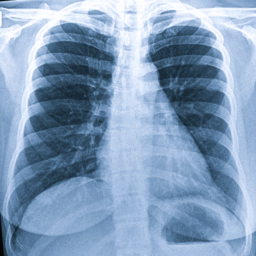
For lung cancer, the most common and deadliest type in the city, more than half of the new cases in 2023 were already at stage 4.
Mok said it would be ideal if most new cases were diagnosed at an early stage, when tumours could be removed through surgery. To achieve that, Hong Kong needed to step up its cancer screening efforts, he added.
He is currently leading a government-funded, AI-assisted lung cancer screening pilot programme targeting never-smokers with a family history.
The team has screened 1,800 people using low-dose CT scans, with AI used to assess the images. It identified 1.5 to 2 per cent of participants as needing intervention.
“With the help of AI, we can cut costs by half because we no longer need to hire a radiology specialist,” Mok said.
Meanwhile, the University of Hong Kong (HKU) has conducted similar AI-assisted lung cancer screening projects for smokers and family members of patients.
Too late for 2030?
The challenge Mok identified in lung cancer care, with most cases detected late, is also seen in liver cancer.
The disease is the third deadliest in Hong Kong, after lung and colorectal cancers. In 2023, more than 45 per cent of cases were diagnosed at an advanced stage.
Most cases are linked to hepatitis B, which has a prevalence rate of 7.8 per cent among people aged 35 to 84.
The World Health Organization (WHO) has set a target to eliminate viral hepatitis as a public health threat by 2030, through vaccination and improved access to testing and treatment.
But Hong Kong only launched a hepatitis B screening programme in February this year, covering those born on or before 1988, when universal childhood vaccination was introduced, as well as people with infected family members or sexual partners.
Professor Yuen Man-fung, chair of gastroenterology and hepatology at HKU, said he was not quite optimistic about the city, as well as most countries, meeting the WHO target with just four years remaining.
He noted that liver cancer was often overlooked because it tended to remain asymptomatic until an advanced stage.
“Identifying hepatitis B carriers and providing interventions, such as antiviral medications or surgical resection of early tumours, could reduce the risk of developing liver cancer and death by 30 to 60 per cent,” Yuen said.
Yuen is currently researching drugs that could spare hepatitis B patients from lifelong medication, with one of them expected to be available in Hong Kong within one to two years.
“You should not assume you are fine just because you feel well. If you carry the virus, you need regular screening, even in your twenties or thirties, and may require treatment to reduce the risk of cirrhosis and liver cancer,” he said.
He added that the screening programme should eventually be expanded to cover all unvaccinated individuals to ensure no one was left behind.
Another emerging high-risk group, he said, was people with fatty liver disease, which affects 30 to 50 per cent of Hongkongers, particularly those with high blood pressure, elevated blood lipids, or high blood sugar.
‘A quiet indictment’
The government launched cervical cancer screening in 2004, colorectal cancer screening in 2016 and breast cancer screening in two phases in 2021 and 2025.
The results appear promising: at least 50 per cent of cases identified through these programmes were detected at the first and second stages.
However, overall statistics for 2023 reveal a persistent gap, with 50.5 per cent of colorectal cancer cases and 20.4 per cent of breast cancer cases only discovered at the third and fourth stage.
Dicky Chow Ka-chun, assistant research director at think tank Our Hong Kong Foundation, said the city lagged in prevention, screening and primary care integration, despite its strengths in treatment and research.
For example, the WHO recommends a cervical screening coverage target of 70 per cent for women by age 35 and again by 45.
However, only 50 per cent of eligible women in Hong Kong have ever been screened, according to the 2020-22 Population Health Survey.
“Hongkongers tend to see health management as a specialised, professional matter rather than a personal responsibility,” he said.
“They often go directly to specialists without seeing a general practitioner. We need to change the culture so people believe they are in control of their own health.”
To better motivate screening, Chow suggested moving beyond general awareness to more specific “mental cues”, such as age-based screening timetables, to help at-risk groups feel more relevant.
He also urged the government to leverage primary healthcare networks and private partnerships to ease screening and treatment caseloads.
To achieve this, authorities must ensure voluntary health insurance adequately covers such services, while convincing the public that the quality of care is comparable.
Samuel Mak Ka-yan, convenor of the Cancer Strategy Concern Group, said it was time for Hong Kong to introduce universal screening for more prevalent and deadly types of the disease, such as lung, breast and liver cancer, instead of simply covering the high-risk groups.
“Every late-stage cancer we detect is a quiet indictment of a missed opportunity for screening,” said Mak, who recently underwent surgery to remove a stage 1 lung tumour detected during a regular check-up.
“People often have the misconception that if they are not eligible for existing screening programmes, they are not at risk … could the government offer more incentives, such as tax benefits for those who undergo regular screening?”
Crossing the border
Despite Hong Kong’s access to innovative treatments, Mak said some patients still struggled with the high cost of drugs not yet included in the Hospital Authority’s formulary.
He said the authority’s drug advisory committee often rejected applications for reasons such as “insufficient justification of cost-effectiveness” or “pending further information”.
“As a result, there is a lot of back-and-forth before a drug is approved, and patients can do nothing but wait,” he said.
Some rejected drugs are already subsidised in other developed economies and mainland China, prompting patients who are fit enough to travel to seek treatment across the border.
He called for greater transparency on what is lacking in applications, to better inform drug makers and give patients more clarity and hope.
Echoing this, Dr Wendy Chan Wing-lok, a clinical associate professor of practice in HKU’s clinical oncology department, said that while the Hospital Authority had set key performance indicators (KPIs) for waiting times for breast, colorectal and nasopharyngeal cancer treatments, no targets existed for other cancers.
The median waiting time for breast cancer patients to receive the first treatment after diagnosis was 43 days in 2024-25
For colorectal cancer, the median waiting time was 50 days in 2024-25, nine days longer than six years earlier. For nasopharyngeal cancer, it rose to 42 days from 37 days.
The waiting time for radical radiotherapy after the decision to treat was the only indicator that improved, falling from 18 days to 12 days over the same period.
The authority said the selection of monitoring indicators was based on disease burden, effectiveness of intervention and data availability. It added that a KPI review mechanism was in place to ensure alignment with current service needs.
The biomedical race
Beyond hospital wards, Hong Kong is seeking to transform itself into a global innovation hub, building on its strengths in cancer research.
In recent years, the government has launched a range of initiatives, including the Greater Bay Area International Clinical Trial Institute, which supports clinical trial resources across the public and private sectors, as well as collaborations with the National Cancer Centre in Beijing.
However, observers said Hong Kong must do more to sharpen its competitive edge and attract drug makers to conduct clinical trials amid intensifying global competition.
Yuen, the HKU professor and an internationally renowned researcher on hepatitis B, is spearheading multiple international trials on new treatments for the disease.
He said some administrative hurdles had been eased, with faster approval of import licences, but significant challenges remained.
Currently, there are only three principal clinical investigators on his team overseeing a large number of studies, alongside their clinical, teaching and administrative duties. They are supported by four to six sub-investigators, who are hospital staff.
“For now, we have been inviting public doctors to do research with us, and recruiting those with potential and passion to our academic team,” he said.
Yuen urged the government to identify areas where Hong Kong was already globally competitive and invest heavily in them, while promoting the city’s efficiency in conducting drug research.
“Hong Kong is a top global site for clinical trials of hepatitis B drugs because we are efficient, credible and internationally recognised … and conducting trials here often facilitates approval on the mainland,” he said.
“But we are facing growing competition from across the border, which has a much larger patient pool and has been involved in many global research projects. If we do not act, drug makers may choose Guangzhou, Beijing or Shanghai for research within five to 10 years, instead of Hong Kong.”
Echoing Yuen, CUHK’s Professor Tony Mok said the city needed to strengthen its strategic role in helping Chinese-developed drugs go global.
Opportunities to collaborate with the mainland were among the reasons Mok returned to Hong Kong in 1996 after years of practising in Canada.
As the mainland accelerates development of its own cancer drugs, Mok said Hong Kong should go beyond conducting trials and seek to co-develop treatments with its scientists, a shift that would require greater investment in talent.
“Hong Kong has made significant contributions to the development of cancer therapeutics. What we need to do next is encourage young doctors to carry this forward and deepen collaboration with the mainland,” he said.
To nurture more clinician-scientists, CUHK has introduced a new pathway allowing doctors to begin PhD studies in their second year of specialist training, rather than completing the two stages sequentially, a process that could otherwise take up to 17 years.
“If we do not do more now, Chinese drug makers may bypass Hong Kong and take their products directly to established markets such as the United States,” he said.
Original source: cn