
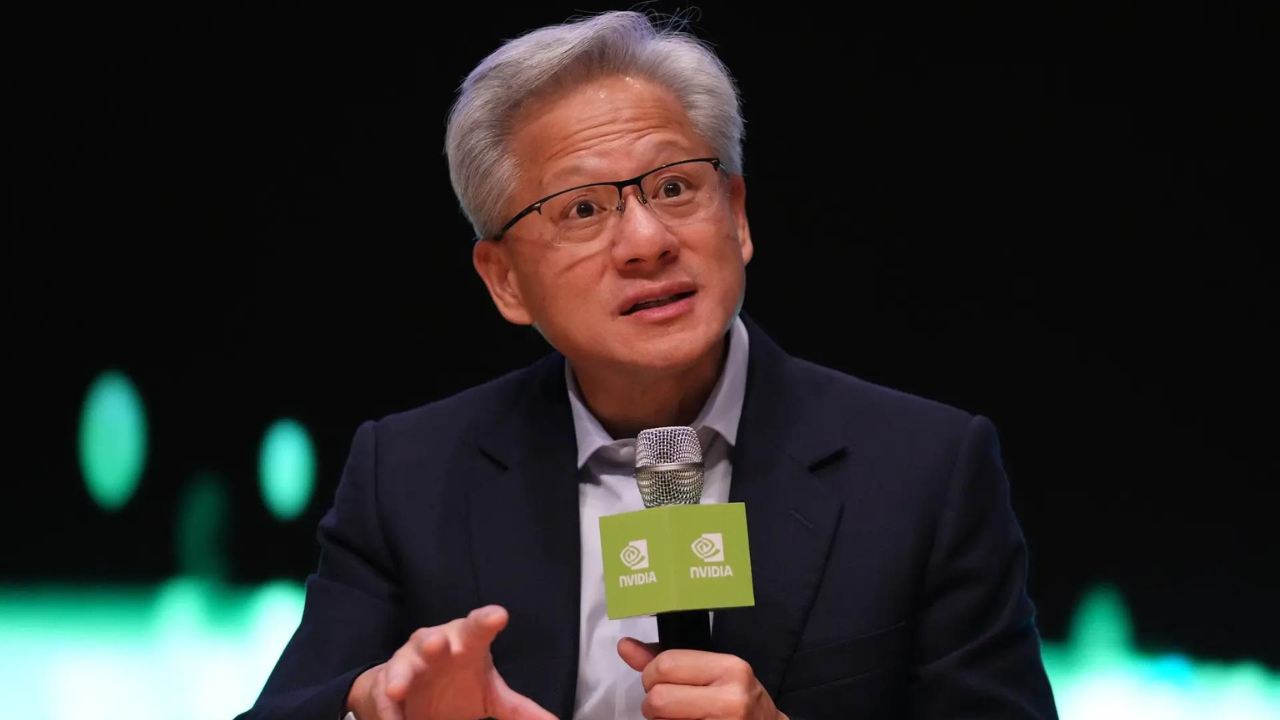
Nvidia CEO Jensen Huang said AI’s boost to productivity would simply make workers busier, and their companies wouldn’t give them more paid time off. According to him, while AI can automate many mundane tasks, the efficiency it affords will not decrease the amount of work; instead, it will free people to pursue a wave of new ideas and unfinished projects. At the recent US-Saudi Investment Forum, sitting alongside Tesla CEO Elon Musk, Huang said: “If your life becomes more productive and if the things that you’re doing with great difficulty become simpler, it is very likely because you have so many ideas you’ll have more time to pursue things.”The chief executive of the US-based chipmaking giant also argued that productivity gains will not erase work but it will create more of it. He predicted: “Everybody’s jobs will be different,” a Fortune report noted.”I would say that there’s every evidence that we will be more productive and yet still be busier because we have so many ideas. It is my guess that Elon will be busier as a result of AI. I’m going to be busier as a result of AI,” Huang added.As an example, Huang cited the field of radiology. He noted: “The prediction that all radiologists would be the first jobs to go was exactly the opposite.”When AI improved image analysis efficiency, it gave workers more time to read additional scans, manage more images, and spend time with patients. This shift led to job growth, countering earlier predictions. What Tesla CEO Elon Musk said about AI’s impact on future jobs at the eventWhile discussing the implications of AI on future jobs, Musk predicted that work could become optional in the near future, as jobs will be seen more like sports or video games. He said: “If you want to work, you know, in the same way, you can go to the store and just buy some vegetables or you could grow vegetables in your backyard.”During its recent earnings call, Nvidia, which is a major player in the AI surge, reported strong revenue growth. However, as younger workers grow concerned that AI may replace the early-career roles they rely on, Huang’s comments offer a view of how work may evolve. The World Economic Forum estimates that AI could replace 92 million jobs while creating around 170 million new ones.Despite Huang’s optimism, the job market is proving challenging to enter for many graduates, as AI is reducing the need for many entry-level positions. Many are turning to advanced degrees, such as MBAs and law programs, as a form of protection. It is not the first time Huang has talked about AI and its impact on productivity. Earlier, he assured people that they should not be scared of losing their jobs to AI, but rather focus on the risk of losing their jobs to those who know how to use AI more effectively.
Original source: in