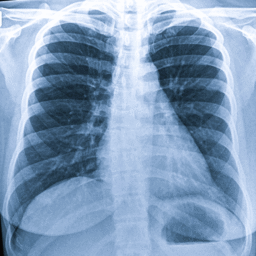
Regional Queensland women are waiting up to nine times longer for a private mammogram than their city counterparts, according to the Australian Diagnostic Imaging Association (ADIA).
ADIA chief executive officer Chris Kane said its members were reporting women in metropolitan areas typically waited three to four weeks for diagnostic breast screening at private radiology clinics.
“Where mammography is available at all [in regional Queensland], patients are typically waiting between four and nine months.”
Months wait for scan
Maxine Austin from Bundaberg, 350 kilometres north of Brisbane, is one of those facing a long wait.
Aged in her 60s, Ms Austin was due for her biennial mammogram in October.
“As of right now, I don’t have an appointment.”
Ms Austin, who has a family history of breast cancer, has her breast imaging — including mammograms and ultrasound — at a private provider.
The state government’s BreastScreen Queensland service offers free mammograms for women aged over 40 who do not have symptoms.
In the Wide Bay region where Ms Austin lives, the wait time at BreastScreen Queensland is generally up to four weeks.
Barriers delay detection
Long wait times for mammograms could have “potentially tragic” consequences, said Mr Kane.
“We know that for women with aggressive tumours, waiting for months could be the difference between treatable disease and metastatic malignancy,” Mr Kane said.
The Wide Bay has the highest mortality rate for all cancers in regional and remote Queensland, according to the Chief Health Officer’s most recent The Health of Queenslanders report in 2022.
It also topped the list for the highest rate of breast cancer in women, with 85.2 people per 100,000 diagnosed, compared with the Queensland average of 72.4.
Breast Cancer Network Australia said private diagnostic imaging needed as many resources as the BreastScreen program.
“When we see barriers for women to be able to access the screening and preventative health needs, it can delay things,” Vicki Durston, the director of policy, advocacy and support services, said.
“The problem we see is that if there are delays then breast cancers will not be picked up early.”
Scan a ‘loss maker’
Medicare-subsidised breast screening services, privately and through BreastScreen, showed the number of Queensland women being screened each year remained steady at around 235,000.
The ADIA said the months-long wait for private breast screening in regional Queensland was partly due to decades-old Medicare rebates.
Mr Kane said bulk billing rates for mammograms were “well under” 50 per cent, compared with overall bulk billing rates for X-rays and scans sitting around 75 per cent.
“Mammography is a loss maker, so it isn’t viable to provide everywhere because of how low the [Medicare] rebates are,” he said.
“And second, there just aren’t enough radiologists choosing to specialise in breast imaging because it’s so underfunded.”
The Australasian Society of Medical Imaging and Radiation Technology said the cost of clinical placements for students was contributing to a shortage of radiologists.
She said a Medical Radiation Science degree required up to 56 weeks of clinical placement, often away from home.
The federal government’s Commonwealth Prac Payment (CPP) of $331.65 a week to offset the cost of practical placements, currently only applies to those studying nursing, midwifery, teaching or social work.
The federal government will review the CCP in 2027-2028.
A spokesperson for the federal Department of Health, Disability and Ageing said the department was currently reviewing Medicare-funded diagnostic breast imaging services.
“As part of this review, the structure of the items and the fees for breast imaging services are being considered,” the statement said.
The spokesperson said the decision to bulk bill remains the decision of service providers, irrespective of the Medicare fee.
Original source: AU