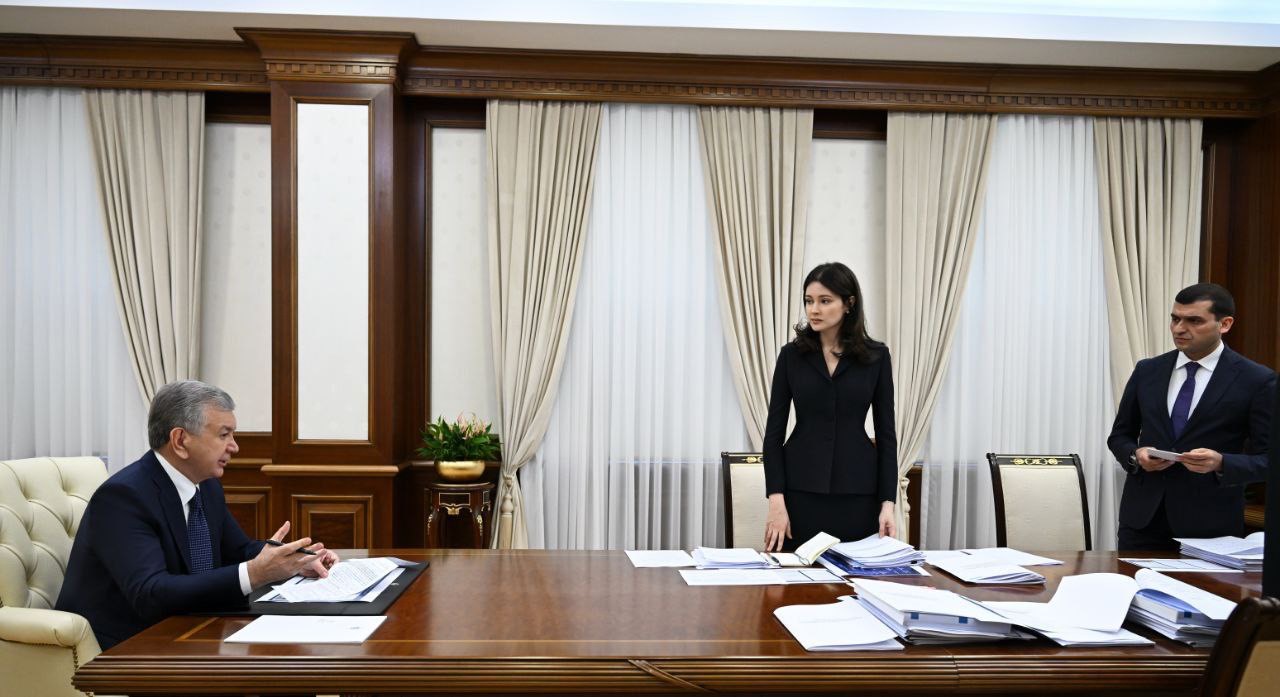
President Shavkat Mirziyoyev recently reviewed a report on new measures aimed at reforming Uzbekistan’s healthcare system, with a focus on strengthening primary care, improving specialized treatment, and enhancing children’s health.
The reforms prioritize the introduction of a new model of primary healthcare, drawing on international experience to make medical services more accessible to the population. Under this framework, central polyclinics, family doctor stations, family polyclinics, and neighborhood medical stations are being developed using a unified approach.
Plans call for raising the share of family doctors to 70%. Digitization and reduced paperwork are expected to cut the workload of medical workers by nearly a third while boosting citizen satisfaction with primary care services to 85%. A new performance-based financial incentive system will also be introduced for healthcare professionals.
President Mirziyoyev highlighted the need to improve specialized medical care. Although dozens of specialized medical centers are being equipped with modern technology and supported by budget funds, public concerns over service quality and long waiting times remain. The president stressed the importance of adopting international treatment standards and improving coordination between primary and specialized care.
To strengthen management in specialized centers, the possibility of appointing foreign professional managers or transferring facilities to the oversight of internationally recognized clinics will be considered. The Republican Center for Oncology and Radiology, currently operating with Turkish specialists, was cited as a successful example.
As part of ongoing reforms, more than 400 clinical protocols have already been revised, with the number expected to double by year’s end. In cooperation with the Asian Development Bank, a new tariff methodology covering over 3,000 medical services is also being developed.
Children’s health formed a key part of the agenda. Uzbekistan will launch a national program to promote breastfeeding, with the aim of reaching the World Health Organization’s target of 70% exclusive breastfeeding among infants under six months by 2030. The program will implement WHO and UNICEF’s “Breastfeeding-Friendly Medical Facility” and “10 Steps to Successful Breastfeeding” initiatives.
The plan includes medical staff training, awareness campaigns for mothers, and legislative changes to restrict breast milk substitute advertising. Standards covering the production, import, storage, and sale of children’s food products will also be strengthened.
President Mirziyoyev approved the proposed measures and instructed responsible agencies to prioritize bringing healthcare closer to communities, reducing mortality from non-communicable diseases, and improving the overall health of the younger generation.
Original source: uz