As Hong Kong marks the 29th anniversary of its return to Chinese rule on July 1, the South China Morning Post talks to the city’s senior officials about the administration’s achievements so far and what may lie ahead.
Allowing all doctors without permanent residency to work in Hong Kong will not threaten the careers of local practitioners, the health minister has said as he defended a proposal to revamp the medical registration regime.
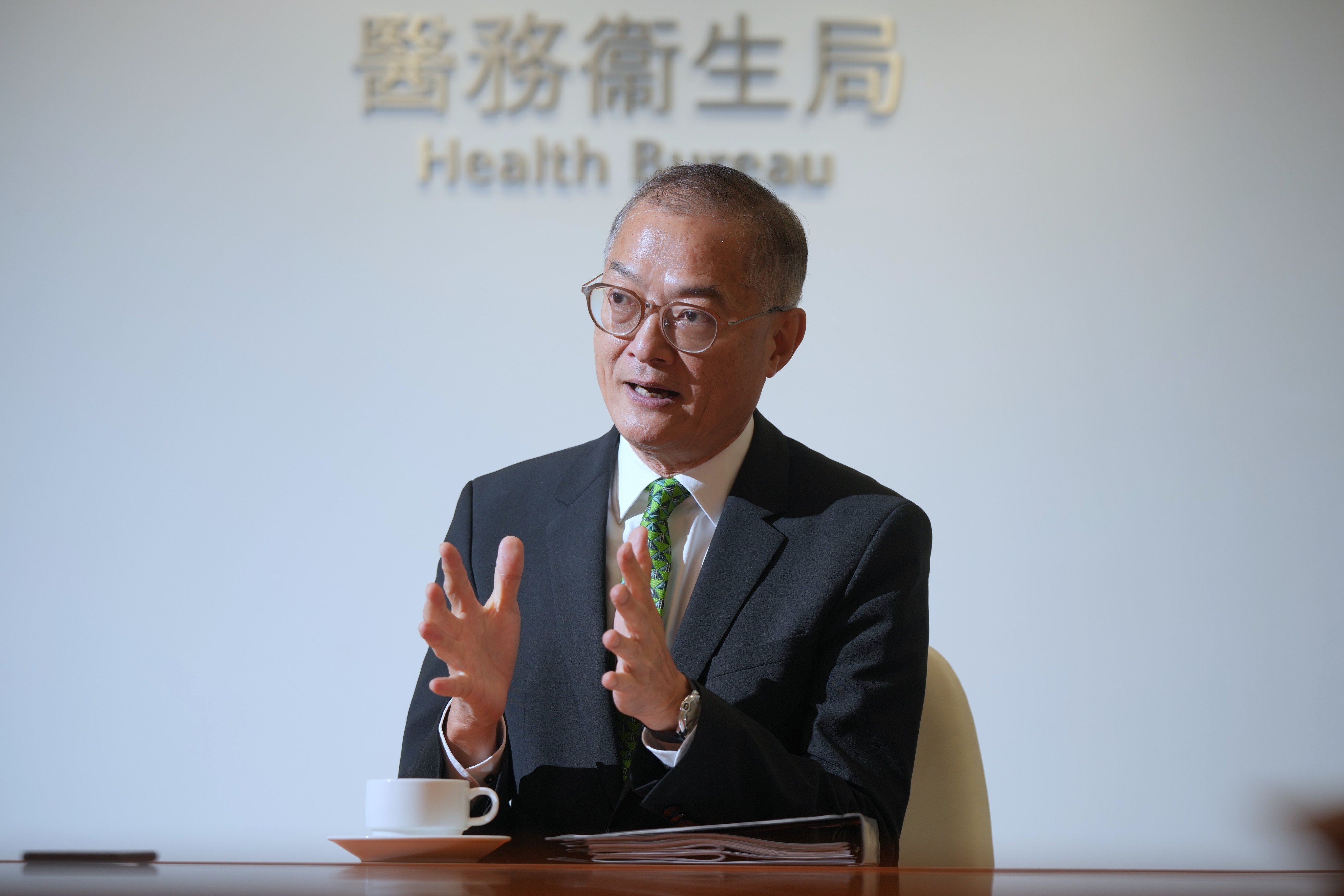
In an exclusive interview with the South China Morning Post, Secretary for Health Lo Chung-mau said the relaxation of licensing rules was aimed at attracting more younger doctors to the city.
“The existing restriction hindered our talent recruitment. It is incredibly difficult to attract specialists – such as consultants and professors – because they have already settled into their careers and their family lives abroad,” Lo said.
“Recruitment data from the Hospital Authority and universities showed that there are many young, high-quality doctors who have not yet attained specialist qualifications [from abroad]. If we can recruit them early, they can integrate into our system sooner and make a faster contribution.”
A bill allowing the changes is expected to be sent to the legislature in two weeks.
The Medical Registration Ordinance was last amended in 2021 to introduce an eased registration pathway for non-local doctors.
It allowed doctors with recognised qualifications to practise in Hong Kong without taking a licensing exam.
Doctors can obtain full registration after serving at least five years in public healthcare and being deemed competent.
But non-permanent residents applying for the pathway must have obtained specialist qualifications – a restriction that the government sought to remove in the latest round of amendments.
Previously, doctors from outside the city could practise in the public healthcare system without taking the exam under a limited registration arrangement. But the registration needed to be renewed every three years, and the doctors could not obtain a full licence no matter how many years they served.
Since 2021, Hong Kong has brought more than 300 doctors via the eased pathway to the Hosptial Authority. Taking into account those imported under limited registration, Hong Kong has about 500 doctors trained outside the city, accounting for 3 per cent of all 17,000 practitioners, Lo said.
Lo dismissed concerns that removing the restriction would threaten the training and promotion opportunities of local doctors.
“We do not allow those doctors to practise anywhere, but strictly limit it to the Hospital Authority, Department of Health or universities that have vacancies,” he said.
“For public hospitals, they would always give priority to local graduates and then recruit non-locally trained doctors for the positions left vacant.”
Lo pointed out that radiology, ophthalmology, anaesthesiology and dermatology were the most sought-after specialties by local graduates. Some specialties failed to attract any applications, he noted.
While the government was trying to ensure local doctors had career opportunities, they must consider the needs of the public, the minister said.
“After all, we cannot leave certain positions vacant … we need to consider the overall interest of Hong Kong,” he said.
Asked if authorities would introduce a cap on the proportion of non-locally trained doctors, Lo pointed to the experiences of Singapore and the United Kingdom.
“Both Singapore and the United Kingdom have over 30 per cent of their doctors imported. I’m not saying this is our target, but we need to look at the objective data … Hong Kong is exceptionally lagging in importing non-local medical talent,” he said.
The minister said the ranks of non-locally trained doctors served as a buffer when certain specialties faced recruitment challenges.
Given that it took 13 years to train a specialist from scratch, it was more reasonable to import doctors than force patients to wait, he said.
“Look at the figures, and you will know that what we are doing is nothing excessive, and it has no impact on local doctors,” he said.
According to a healthcare manpower projection in 2023, Hong Kong will be short of 1,570 doctors in 2030.
Apart from importing non-locally trained doctors, authorities also increased the number of local medical places and approved the Hong Kong University of Science and Technology to launch the city’s third medical school.
Original source: cn