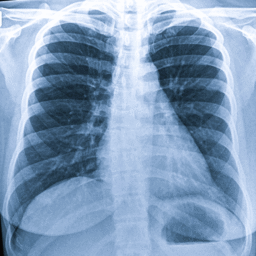

A Landmark Reform Confronting a Systemic Crisis: The enactment of Zimbabwe’s Medical Services Amendment Act, 2026 represents one of the most significant reforms of the country’s health legislation since the adoption of the Constitution in 2013. By expanding legal definitions relating to basic healthcare, emergency medical treatment, chronic illness and healthcare providers, the Act seeks to strengthen the statutory protection of patients’ rights and clarify the obligations of healthcare institutions. It reflects an acknowledgement by policymakers that access to healthcare is not merely a policy aspiration but a constitutional entitlement.
By Our Insights Team
However, while the legislation modernises the legal framework, it also exposes a much deeper structural challenge confronting Zimbabwe’s healthcare system. Laws establish rights, responsibilities and standards, but they cannot create functioning hospitals, recruit doctors, procure medicines or finance modern medical equipment. In public health policy, legislation is only one component of an effective health system; sustainable financing, institutional capacity and sound governance are equally indispensable. Without these complementary pillars, legal guarantees risk becoming rights that exist on paper but remain inaccessible in practice.
The Emergence of Zimbabwe’s Two-Tier Healthcare System
Zimbabwe’s healthcare system has progressively evolved into a de facto two-tier model, where the quality and speed of medical treatment increasingly depend upon an individual’s financial capacity rather than medical necessity. Although the country officially operates a mixed healthcare system comprising both public and private providers, economic realities have created two distinctly different health economies operating alongside one another.
The widespread use of the United States dollar alongside the Zimbabwe Gold (ZiG) currency has significantly accelerated this divergence. Private healthcare providers, largely financed through US dollar payments, employer-sponsored medical insurance and private medical aid schemes, have continued to expand their infrastructure, acquire advanced diagnostic technologies and recruit specialist healthcare professionals. Many private hospitals now offer sophisticated surgical procedures, modern intensive care facilities, specialist oncology services, advanced imaging technologies and reliable pharmaceutical supplies comparable to those found in middle-income countries.
By contrast, public hospitals remain heavily dependent upon constrained government allocations largely financed in domestic currency. Years of inflation, exchange-rate instability and fiscal pressures have severely weakened their purchasing power, making it increasingly difficult to procure medicines, maintain equipment, renovate ageing infrastructure or retain experienced healthcare professionals. The result has been the emergence of two parallel healthcare systems serving populations with vastly different economic means.
Currency Dualism and Healthcare Inequality
Few countries illustrate the relationship between macroeconomic instability and healthcare delivery as clearly as Zimbabwe. From a health economics perspective, the coexistence of two currencies has effectively segmented the healthcare market into institutions with access to hard currency and those reliant upon local currency financing.
Healthcare is an import-intensive sector. Medicines, laboratory reagents, diagnostic equipment, dialysis consumables, surgical implants, radiological technology and many specialised medical devices are purchased on international markets using foreign currency. Institutions able to generate US dollar revenues possess significantly greater purchasing power than those financed primarily through domestic budgets.
Consequently, suppliers naturally prioritise customers capable of paying in stable foreign currency. This has enabled private hospitals to maintain relatively stable pharmaceutical inventories, modern medical equipment and uninterrupted clinical services while public hospitals frequently experience stock-outs, delayed maintenance and shortages of essential supplies. Economic theory predicts precisely this outcome whenever two purchasers operate within the same market using currencies of substantially different purchasing power.
The Deterioration of Public Healthcare Infrastructure
Zimbabwe’s public healthcare system was once regarded as one of Africa’s strongest, particularly during the early years following independence when substantial investments were made in primary healthcare, immunisation programmes and rural health infrastructure. During the 1980s and early 1990s, the country achieved impressive improvements in child survival, maternal health and infectious disease control, earning international recognition for its commitment to primary healthcare.
That trajectory has gradually reversed. Decades of economic crises, declining public investment, infrastructure deterioration and healthcare worker migration have significantly weakened institutional capacity. Many public hospitals now operate with ageing buildings, obsolete diagnostic equipment, intermittent electricity and water supplies, overcrowded wards and chronic shortages of medicines and consumables. Preventive maintenance has often been deferred due to fiscal constraints, resulting in equipment failures that further compromise service delivery.
The deterioration extends beyond physical infrastructure. Laboratory capacity has been constrained by shortages of reagents, radiology departments frequently struggle with malfunctioning imaging equipment, operating theatres face shortages of essential surgical supplies and intensive care units often operate below required capacity. These systemic deficiencies have progressively reduced the range and quality of services available within the public sector.
Public Hospitals as Stabilisation and Referral Centres
One of the most visible consequences of this decline has been the changing role of Zimbabwe’s public hospitals. Institutions originally designed to provide comprehensive secondary and tertiary healthcare increasingly function as centres for emergency stabilisation before referring patients elsewhere for definitive treatment.
Patients presenting with complex cardiovascular disease, neurological disorders, cancer, kidney failure or major trauma are frequently stabilised before being referred to private institutions because specialised investigations, surgical equipment or advanced treatment options are unavailable within the public system. In many instances, families must rapidly mobilise thousands of US dollars to secure treatment in private hospitals, regardless of their financial circumstances.
As a result, public hospitals are increasingly perceived as facilities providing emergency care, palliative services and mortuary functions, while specialist medicine has progressively migrated into the private sector. Such perceptions may oversimplify the important work still undertaken by public hospitals, but they reflect growing public concern about declining capacity to provide comprehensive care.
The Growing Burden on Zimbabwean Households
The expansion of private healthcare has transferred an increasing proportion of healthcare financing from the state to individual households. Zimbabwe now relies heavily on direct out-of-pocket expenditure, one of the least equitable methods of financing healthcare, according to the World Health Organisation.
Many households finance medical treatment through savings, the sale of livestock or household assets, informal borrowing, employer assistance or financial support from relatives living abroad. For lower-income families, a serious illness frequently becomes not only a medical emergency but also a financial catastrophe.
Health economists describe this phenomenon as catastrophic health expenditure, whereby medical costs consume such a large proportion of household income that families are forced to reduce spending on food, education, housing or other essential needs. Numerous international studies demonstrate that catastrophic healthcare spending is one of the principal mechanisms through which illness perpetuates poverty, particularly in low- and middle-income countries lacking comprehensive universal health coverage.
Delayed healthcare seeking further compounds the problem. Patients often postpone seeking treatment because of anticipated costs, only presenting when illnesses have progressed to more advanced and expensive stages. This results in poorer clinical outcomes, higher treatment costs and increased mortality from conditions that could have been managed effectively through earlier intervention.
Health Economics: Why Strong Public Healthcare Matters
From a health economics perspective, healthcare should be regarded as a productive public investment rather than recurrent government expenditure. Modern economic theory increasingly recognises health as a critical component of human capital development, alongside education and skills acquisition.
Healthy populations are more productive, experience fewer work absences, remain economically active for longer and contribute more effectively to national economic growth. Conversely, poor health reduces labour productivity, increases disability, lowers educational attainment among children and imposes substantial costs on both families and employers.
Investment in preventive healthcare, vaccination programmes, maternal health services, disease surveillance and primary healthcare consistently yields some of the highest social returns of any public expenditure. Preventing disease is invariably less expensive than treating advanced illness. Every dollar invested in effective primary healthcare reduces future expenditure on hospital admissions, specialist care and long-term disability.
Consequently, weakening public healthcare represents not merely a social challenge but an economic one. Countries that neglect health investment often experience slower economic growth, lower workforce productivity and reduced competitiveness over the long term.
International Lessons from Successful Mixed Healthcare Systems
International evidence demonstrates that successful mixed healthcare systems do not eliminate private healthcare but ensure that it complements rather than replaces a strong public sector. The United Kingdom’s National Health Service (NHS) continues to provide universal healthcare financed primarily through taxation, while private healthcare operates alongside it as an optional alternative rather than a necessity.
Germany and France maintain universal access through compulsory social health insurance, combining public financing with regulated private providers while preserving equitable access to essential services. Canada similarly guarantees publicly funded hospital and physician services regardless of income, despite the presence of private providers in selected sectors.
Singapore offers another instructive model, combining compulsory medical savings accounts, government subsidies, mandatory insurance and carefully regulated private provision. Despite its market-oriented approach, Singapore continues to invest heavily in high-quality public hospitals, ensuring that access to essential healthcare remains affordable across income groups.
These systems differ institutionally, yet they share a common principle: governments continue investing substantially in public healthcare because equitable access improves both health outcomes and long-term economic performance.
Regional Comparisons: Southern Africa’s Different Paths
Zimbabwe’s experience mirrors some regional trends while differing significantly from others. South Africa possesses one of Africa’s most advanced private healthcare industries, yet it also faces profound inequalities between private and public healthcare. A relatively small proportion of the population covered by private medical insurance accounts for a disproportionately large share of national healthcare expenditure, prompting continuing efforts to establish a National Health Insurance system capable of reducing inequities.
Botswana has adopted a different trajectory by consistently investing mineral revenues into strengthening public healthcare infrastructure, workforce development and universal access while allowing private providers to supplement government services. Rwanda, despite substantially lower national income levels, has become an internationally recognised example of successful health system reform through community-based health insurance, decentralised primary healthcare and sustained public investment. The country’s improvements in life expectancy, maternal mortality and child survival demonstrate that effective governance and strategic investment can produce substantial health gains even within limited fiscal environments.
These international experiences demonstrate that private healthcare need not undermine equity. The decisive factor is whether governments maintain a resilient public health system capable of guaranteeing a minimum standard of quality care irrespective of income.
Healthcare Workforce Migration and Institutional Decline
No health system can function effectively without a stable and motivated workforce. Zimbabwe continues to experience significant migration of doctors, nurses, pharmacists, laboratory scientists and other healthcare professionals to both domestic private institutions and higher-income countries. Better remuneration, improved working conditions, greater access to medical technology, and enhanced career development opportunities continue to attract highly trained professionals away from the public sector.
This phenomenon represents a substantial economic loss. The state invests considerable public resources in training healthcare professionals, only for those investments to benefit private providers or foreign health systems. The resulting shortages place additional pressure on remaining staff, contribute to burnout, lengthen waiting times and reduce the quality of patient care. Addressing workforce retention therefore requires not only competitive remuneration but also improvements in working conditions, professional development opportunities, infrastructure and institutional governance.
Legislation Alone Cannot Deliver Universal Health Coverage
The Medical Services Amendment Act, 2026, provides an important legal foundation for strengthening patient rights and clarifying healthcare obligations. However, legislation cannot substitute for sustainable financing, macroeconomic stability or institutional capacity. The effectiveness of the Act will ultimately depend upon whether the government can invest sufficiently in hospitals, healthcare workers, pharmaceuticals, medical equipment, digital health systems and primary healthcare services.
Universal health coverage cannot be achieved through legal reform alone. It requires a comprehensive strategy encompassing fiscal discipline, health financing reform, efficient procurement systems, transparent governance and sustained investment in public healthcare infrastructure. Without these complementary reforms, the gap between Zimbabwe’s public and private healthcare sectors is likely to continue widening.
Healthcare as an Investment in National Development
Ultimately, the future of Zimbabwe’s healthcare system should be viewed through the broader lens of national development rather than public expenditure alone. Countries with healthier populations consistently enjoy higher labour productivity, stronger educational outcomes, greater economic resilience and increased investor confidence. Health is therefore not simply a social service; it is one of the most valuable forms of national capital.
Zimbabwe’s Medical Services Amendment Act, 2026, signals an important recognition that healthcare requires a stronger legal framework. Nevertheless, the country’s most pressing challenge is no longer legislative but economic. Unless the structural causes of public sector decline—including chronic underinvestment, macroeconomic instability, workforce migration and infrastructure deterioration—are comprehensively addressed, Zimbabwe’s healthcare system will continue to move further towards a two-tier model in which access to quality medical care is increasingly determined by wealth rather than medical need. The long-term success of the Act will therefore depend not on the words contained in legislation, but on the political will and economic capacity to transform those legal rights into accessible, affordable and high-quality healthcare for every Zimbabwean.
Original source: zw